
The Wolverine stack has no fixed recipe. Most pages use the name for BPC-157 plus TB-500. Others stretch it to four compounds by adding CJC-1295 and ipamorelin, and some use it for BPC-157, TB-500, KPV and GHK-Cu. So a BPC-157 vs Wolverine stack comparison begins with a definition. On this page the stack means the original pair, BPC-157 and TB-500, and the comparison is one compound against that pair. It covers what each side contains, what the research behind the added TB-500 covers, what the batch certificates show, and when a single compound or a pair makes the better study. Everything below describes laboratory research. The listings are linked as we go, and the peptides for healing category shows the neighboring compounds.
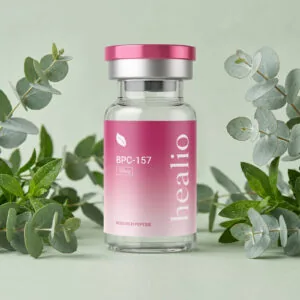 BPC-157
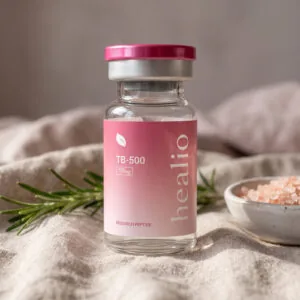 TB-500
What “Wolverine stack” means across sources
The nickname has at least four uses. The narrowest is BPC-157 plus TB-500, the sense on this page. Some clinic pages add CJC-1295 and ipamorelin to make a four-compound protocol. Others use it for BPC-157, TB-500, KPV and GHK-Cu. And pre-mixed BPC-157 and TB-500 vials sold under the name come in a range of strengths, which is why searches for the Wolverine stack in 5mg, 10mg and 20mg all exist. When two pages disagree about the stack’s effects, they may be describing different contents. Check the milligrams of each compound before comparing anything.
BPC-157 vs the Wolverine stack: what is the difference?
BPC-157 is one compound: a 15 amino acid peptide derived from a protein in gastric juice, studied for blood vessel formation and tissue repair. The Wolverine stack is that peptide together with TB-500, a synthetic fragment of thymosin beta-4 studied for actin binding and cell migration. So the difference is TB-500. Adding it brings a second mechanism into the study, cell movement alongside blood supply, and a second set of papers whose strength differs from BPC-157’s. At Healio Peptides the pair is two vials, BPC-157 for sale and TB-500 for sale.
BPC-157 vs the Wolverine stack side by side
The table covers the fixed facts, plus size, price and batch data pulled live from the product and certificate pages. Searching bpc 157 vs wolverine stack or the wolverine peptide stack vs bpc 157 gives the same two columns.
| BPC-157 alone | Wolverine stack | |
|---|---|---|
| What is in it | BPC-157 | BPC-157 and TB-500 |
| Number of compounds | 1 | 2 |
| BPC-157 share of the powder | All of it | Half (10mg of 20mg across two vials) |
| Main research areas | Blood vessel formation, growth factor signaling, tendon, ligament, muscle and gut lining | Those, plus actin binding and cell migration |
| Format at Healio Peptides | One 10mg vial | Two separate vials, 10mg each |
| Price | $59.99 | $134.98 for the two vials |
| Latest batch purity (HPLC) | 99.5% | BPC-157 99.5%, TB-500 99.1% |
| Certificates | BPC-157 COA | BPC-157 COA and TB-500 COA |
What BPC-157 alone covers in research
BPC-157 stands for Body Protection Compound 157. The best single source is a 2025 systematic review in HSS Journal by Vasireddi and colleagues, who kept 36 of 544 articles. Thirty-five were preclinical and one was a small retrospective clinical report. The animal picture is consistent, with activity in angiogenesis and growth pathways and lower inflammatory cytokines, and it’s an animal picture. What BPC-157 does in research explains the mechanism in plain language.
What TB-500 adds to the stack
TB-500 is a synthetic fragment of thymosin beta-4, and its research clusters around actin, the scaffolding that lets a cell change shape and move. A 2010 review in The FASEB Journal by Sosne, Qiu and Goldstein explains where the fragment idea comes from. The human studies cited for the thymosin family were run on the full protein, such as a 2015 phase 2 eye drop trial in Cornea in nine patients with severe dry eye, so the TB-500 evidence under its own name is thinner than the label suggests. The TB-500 research benefits page separates what belongs to which, and the BPC-157 vs TB-500 page puts the two head to head.
Why the stack’s evidence is lopsided
The two compounds don’t bring equal evidence. BPC-157 has a large volume of animal work, summarized in the 2025 review. TB-500 has a thinner record under its own name, and a lot of what’s cited for it belongs to thymosin beta-4. So a study built on the pair draws heavily on one half. That isn’t a reason to avoid the pair. It’s a reason to expect the BPC-157 half of any result to be easier to interpret than the TB-500 half.
Stack vs separate vials: how the pair is handled
Because the stack is two vials, each is reconstituted on its own, and each concentration is set independently. That keeps ratios flexible: a study can change one compound and leave the other alone, which a pre-mixed vial doesn’t allow. Both dissolve in bacteriostatic water for sale. The BPC-157 calculator and TB-500 calculator turn vial strength and water volume into a concentration for each. If you’ve seen a pre-mixed Wolverine vial elsewhere, compare milligrams per compound first, since the name alone says nothing about the contents. The Wolverine stack guide covers the nickname in full.
When BPC-157 alone, and when the pair
A question about what BPC-157 does in a tendon, ligament or gut model wants one variable, and the single vial gives it, with results that compare directly against the published BPC-157 papers. A question about whether cell migration adds something to blood vessel growth in the same repair model is what the pair is for, ideally with single-compound arms alongside it. Adding TB-500 later is easy when the two are separate listings.
Wolverine stack and the blends: where GLOW and KLOW fit
The same two compounds sit inside Healio Peptides’ blends. GLOW 70 holds 10mg of each plus 50mg of GHK-Cu, and KLOW 80 adds 10mg of KPV on top. The pair gives way to a smaller share of the powder as the vial grows, which the GLOW vs Wolverine stack and KLOW vs Wolverine stack pages work through.
What the BPC-157 and Wolverine stack studies can’t tell you
Direct testing of BPC-157 with TB-500 is thin. Each compound has its own record, and the pairing rests on the idea that one supplies blood and the other supplies movement. It’s a tidy theory, and the combination hasn’t been tested enough to call it more than that. Studies also differ in route and schedule, and a lot of the BPC-157 literature comes from a small group of laboratories, so independent replication would be worth a great deal. Most repair work used male animals, which leaves a gap for anyone framing a woman’s research question. The BPC-157 research gap in women goes through it.
How to read a Wolverine stack study
Four details decide whether a paper on the stack tells you anything. First, which compounds were given: BPC-157 and TB-500 only, or a longer list. Second, whether TB-500 was the fragment or the full thymosin beta-4 protein, since the two literatures differ. Third, the species and tissue, because a rat Achilles tendon says little about a gut lining. Fourth, whether the study included single-compound arms. Without them, the paper shows what the combination did and can’t say which half did it. Most pages that cite “stack research” skip all four checks, and the claim they make is only as strong as the weakest answer.
BPC-157 and Wolverine stack COA: what the lab reports show
Every Healio Peptides batch is tested by an independent US laboratory before release, and the report is published before you order. These are the current two.
| BPC-157 | TB-500 | |
|---|---|---|
| Batch | HEALIO-BPC157-2605 | HEALIO-TB500-2612 |
| Purity (HPLC) | 99.5% | 99.1% |
| Identity (ESI-MS) | Confirmed, conforms to the reference standard (1419.56) | Confirmed, conforms to the reference standard |
| Endotoxins (LAL) | Under 0.5 EU/mg (limit 5 EU/mg) | Under 0.5 EU/mg (limit 5 EU/mg) |
Match batch and lot numbers to each vial. Reading a peptide certificate of analysis explains each row.
BPC-157 vs Wolverine stack price and format
BPC-157 is $59.99 for a 10mg vial. The pair as two vials is $134.98 at the lowest listed sizes, with TB-500 at $74.99. Both are lyophilized powder. How to reconstitute peptides covers the handling.
BPC-157 vs the Wolverine stack for tendon and soft tissue research
Tendon, ligament and muscle models are where both compounds have their strongest literature, and they’re where the two get compared most. BPC-157 has the larger animal record there, with the 2025 review pulling together findings on healing speed and tissue structure. TB-500’s contribution is cell migration, the arrival of the right cells at the injury, and the evidence for it under that name is thinner. A tendon study using the pair is therefore testing a well-documented compound alongside a less-documented one, and the careful design reports each separately. The peptides for healing tendons guide shows how to read that data carefully.
Where to buy BPC-157 and the Wolverine stack for research
Whichever route you take, look for a published certificate before anything else. Every Healio Peptides batch ships with a third-party report, and orders go out from the United States. For BPC-157 alone, use the BPC-157 listing. For the pair, add the TB-500 listing.
BPC-157 vs Wolverine stack: frequently asked questions
Is the Wolverine stack better than BPC-157 alone?
Neither wins on the evidence. The pair adds a second mechanism and a thinner paper trail for TB-500, and BPC-157 alone keeps the question narrow. The right choice follows from what a study measures.
What is in the Wolverine stack?
Most sources mean BPC-157 and TB-500. Some pages add other compounds, so check what any listing contains before comparing it.
How is the Wolverine stack sourced at Healio Peptides?
As two separate vials, BPC-157 and TB-500, so a study can set its own ratio. The same two compounds are also inside GLOW 70 and KLOW 80.
Can BPC-157 be studied without TB-500?
Yes. BPC-157 is its own listing, and most of the BPC-157 literature used it alone.
Are BPC-157 and the Wolverine stack FDA approved?
Neither is approved as a drug for human use, and both compounds are prohibited in competitive sport. Nothing on this page is medical advice, and Healio Peptides sells them for laboratory research only.
How does the Wolverine stack compare with GLOW?
GLOW holds the same pair plus 50mg of GHK-Cu in one vial. The GLOW vs Wolverine stack page covers the differences.
More on BPC-157 and the Wolverine stack
- BPC-157 and TB-500, the reasoning behind the pairing and its gaps.
- BPC-157 vs GLOW, one compound against the three-compound blend.
- Peptides for healing tendons, how to read the tendon data carefully.
Healio Peptides supplies research compounds for laboratory use only. They are not for human or veterinary use, have not been evaluated by the FDA, and nothing on this page is medical advice.