
Wolverine is a nickname, and nobody manufactures it to a standard. Online, the Wolverine stack means BPC-157 plus TB-500, a pair of repair peptides borrowing the name of the comic book character famous for healing fast. At Healio Peptides the two compounds are separate vials. KLOW 80 holds the same two, 10mg of each, and then adds 50mg of GHK-Cu and 10mg of KPV. So a KLOW peptide vs Wolverine stack comparison is a pair of compounds set against that same pair plus two more. This page covers what each side contains, what the research behind the additions covers, what the batch certificates show, and how the formats and prices compare. Everything describes laboratory research, and the listings are linked as we go for anyone sourcing for a study in the peptides for healing category.
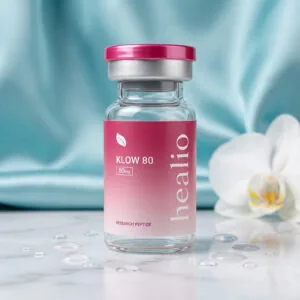 KLOW Peptide Blend
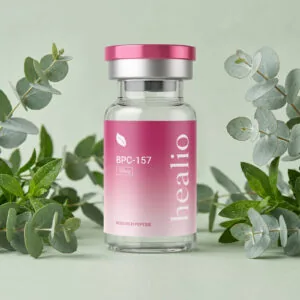 BPC-157
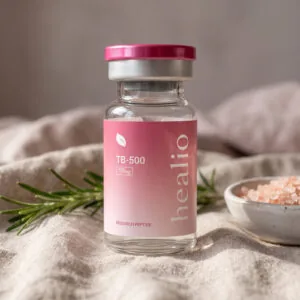 TB-500
KLOW peptide vs Wolverine stack: what is the difference?
The Wolverine stack is two compounds: BPC-157, studied for blood vessel formation and growth factor signaling, and TB-500, a synthetic fragment of thymosin beta-4 studied for actin binding and cell migration. KLOW 80 is four compounds in one 80mg vial: those same two at 10mg each, 50mg of GHK-Cu for collagen and tissue remodeling research, and 10mg of KPV for inflammatory signaling research. The added compounds account for 60mg of the 80, three quarters of the vial by mass.
KLOW peptide vs Wolverine stack side by side
The table covers the fixed facts, plus size, price and batch data pulled live from the product and certificate pages. Searching wolverine stack vs klow, klow vs wolverine or wolverine peptide stack vs klow lands on the same two columns.
| Wolverine stack | KLOW 80 | |
|---|---|---|
| What is in it | BPC-157 and TB-500 | GHK-Cu 50mg, BPC-157 10mg, TB-500 10mg, KPV 10mg |
| Number of compounds | 2 | 4 |
| Main research areas | Blood vessel formation, cell migration, soft tissue repair models | Those, plus collagen and tissue remodeling and inflammatory signaling |
| Format at Healio Peptides | Two separate vials, 10mg each | One 80mg vial |
| Price | $134.98 for the two vials | $119.99 for the vial |
| Latest batch purity (HPLC) | BPC-157 99.5%, TB-500 99.1% | 99.2% |
| Certificates | BPC-157 COA and TB-500 COA | KLOW 80 COA |
What “Wolverine” means on a label
The nickname has no standard recipe. Other sellers list pre-mixed BPC-157 and TB-500 vials, and searches for wolverine stack 5mg, 10mg and 20mg show how many strengths are in circulation. So “Wolverine” alone doesn’t tell you the milligrams in a vial. At Healio Peptides the pair is two vials of 10mg each, and the ratio inside KLOW 80 matches them exactly. If you’re comparing KLOW against a pre-mixed Wolverine vial from another seller, compare milligrams per compound first, because a matching name says nothing about matching contents.
Wolverine stack vs KLOW: what the pair covers in research
The pairing argument is that BPC-157 and TB-500 work on different parts of repair, so together they might cover more of it. A 2025 systematic review in HSS Journal kept 36 BPC-157 studies from 544 articles, 35 preclinical and one a small retrospective clinical report. TB-500 research clusters around cell migration and soft tissue models, and much of what gets cited for it was done on the larger thymosin beta-4 protein. The two have been tested separately far more often than together. The Wolverine stack guide and the BPC-157 vs TB-500 comparison cover the pair in detail, and BPC-157 and TB-500 goes through the reasoning and its gaps.
What KLOW adds: GHK-Cu and KPV
GHK-Cu is the copper tripeptide with the longest record of the four. A 2018 review in the International Journal of Molecular Sciences sets out its regenerative and protective actions, and the 2008 paper The human tri-peptide GHK and tissue remodeling covers the older ground. The fourth compound is the odd one out. KPV is the three amino acid tail of alpha-MSH, and its research is about inflammation. Dalmasso and colleagues in Gastroenterology studied how it gets into intestinal cells and reduced inflammation in mouse colitis, and Kannengiesser and colleagues found anti-inflammatory activity in two murine models of inflammatory bowel disease. Both are rodent studies, and the KPV research page lays out the rest.
So the Wolverine pair is a repair question, GHK-Cu adds a remodeling question, and KPV adds an inflammation question. That is the real content of “KLOW vs Wolverine”: two questions the pair never asked.
KLOW vs Wolverine stack for repair and inflammation research
A study of tendon, ligament or muscle repair models sits squarely inside what the pair has been tested for. A study asking about inflammatory signaling in gut or skin models brings KPV in, which the pair never covered, and a collagen or skin remodeling question brings GHK-Cu. KLOW makes sense when a design wants several of these mechanisms in one reconstitution. The pair makes sense when the question is narrow or the ratios matter. Neither choice is more rigorous in itself. Rigor comes from the controls around it, and a blend needs more of them, since the careful version of a KLOW study would also test each component alone.
Wolverine stack vs a blend: separate vials or one vial
Buying the pair as two vials, which people search as wolverine stack vs separate, keeps each compound independent. Each is reconstituted on its own and each can change without touching the other. A blend fixes the ratio in the vial. KLOW 80 is always 50:10:10:10, which is convenient when a protocol wants all four and a limit when it wants a different split. The KLOW calculator works from the 80mg total, while the BPC-157 calculator and TB-500 calculator cover the single vials. Reconstitution uses bacteriostatic water for sale either way, added slowly down the vial wall, and how to reconstitute peptides covers the handling.
What the KLOW and Wolverine studies can’t tell you
None of the papers cited on this page tests all four compounds together. Every claim about KLOW is stitched from separate literatures, and a result in a blend can’t be traced to one ingredient. That includes the pair: BPC-157 and TB-500 together have thin direct testing, and KLOW multiplies the unknowns. Most repair studies were also built on male animals. A woman reading across to her own research question should treat the sex-stratified evidence as missing, not assumed, and the peptide stacks for women guide explains which gaps matter most.
One question stays open here, and it’s a good one. If KPV really does dampen inflammatory signaling, does that change what the repair pair does in the same system? Nobody has published the experiment.
KLOW peptide vs Wolverine stack COA: what the lab reports show
Every Healio Peptides batch is tested by an independent US laboratory before release, and the report is published before you order. Here are the three current ones.
| BPC-157 | TB-500 | KLOW 80 | |
|---|---|---|---|
| Batch | HEALIO-BPC157-2605 | HEALIO-TB500-2612 | HEALIO-KLOW80-2618 |
| Purity (HPLC) | 99.5% | 99.1% | 99.2% |
| Identity (ESI-MS) | Confirmed, conforms to the reference standard (1419.56) | Confirmed, conforms to the reference standard | Confirmed for each component |
| Endotoxins (LAL) | Under 0.5 EU/mg (limit 5 EU/mg) | Under 0.5 EU/mg (limit 5 EU/mg) | Under 0.5 EU/mg (limit 5 EU/mg) |
On a four-compound vial, the identity line matters more than the headline purity figure. It confirms each component is there. A single purity percentage can’t say whether the mix is right. If certificates are new to you, reading a peptide certificate of analysis walks through every row.
KLOW peptide vs Wolverine stack price and format
The pair as two vials costs $134.98 at the lowest listed sizes. KLOW 80 is $119.99 and includes the pair plus the two extra compounds. The fairer comparison is the whole contents: 50mg of GHK-Cu, a BPC-157 vial, a TB-500 vial and a 10mg KPV vial come to $214.96 separately, so the single vial is 44% lower than buying the four one by one. The sums are calculated live from the listed prices, so they move when the prices do.
Wolverine stack vs GLOW vs KLOW: the ladder
The three products stack by mass. The Wolverine pair is 20mg of compound in total, 10mg of BPC-157 and 10mg of TB-500. GLOW 70 adds 50mg of GHK-Cu and reaches 70mg. KLOW 80 adds 10mg of KPV and reaches 80mg. So a wolverine stack vs glow vs klow search is a three-rung comparison: the pair, the pair plus a copper peptide, and the pair plus a copper peptide and an inflammation compound. Climb the ladder and the pair falls from all of the powder to about 29 percent, then 25 percent. The step from the pair to GLOW has its own page, GLOW vs Wolverine stack, and the last step is covered in GLOW vs KLOW.
Where to buy KLOW and the Wolverine stack for research
Whatever you source, look for a published certificate first. Every Healio Peptides batch ships with a third-party report, and orders go out from the United States. For the pair, use the BPC-157 listing and the TB-500 listing. For all four compounds in one vial, the KLOW 80 listing carries the certificate before you order.
KLOW vs Wolverine stack: frequently asked questions
Is KLOW better than the Wolverine stack?
Neither wins on the evidence. The Wolverine pair is a narrower repair question, and KLOW broadens it with GHK-Cu and KPV. A broader vial isn’t a better one, because the added compounds only matter if a study is asking what they do.
What is the difference between KLOW and Wolverine?
Wolverine is BPC-157 plus TB-500. KLOW 80 is those two plus GHK-Cu and KPV in one vial, at 50:10:10:10 by milligram.
Does KLOW contain the Wolverine stack?
Yes. Each KLOW 80 vial holds 10mg of BPC-157 and 10mg of TB-500, the same amounts as the two single-compound listings.
How does KLOW compare with GLOW and the Wolverine stack?
They form a ladder. The Wolverine pair is the base, GLOW adds GHK-Cu, and KLOW adds KPV on top of GLOW. The GLOW vs Wolverine stack page covers the first step and GLOW vs KLOW the second.
Are KLOW and the Wolverine stack FDA approved?
Neither is approved as a drug for human use, both sit almost entirely in animal and cell research, and nothing on this page is medical advice. Healio Peptides sells them for laboratory research only.
How is the Wolverine stack sourced at Healio Peptides?
As two separate listings, BPC-157 and TB-500, so a study can set its own ratio. The same two compounds are also inside GLOW 70 and KLOW 80.
More on KLOW and the Wolverine stack
- KLOW peptide benefits, the four compounds broken down one at a time.
- BPC-157 vs KLOW, one compound against the four-compound vial.
- The best peptides for healing, and what each was studied for.
Healio Peptides supplies research compounds for laboratory use only. They are not for human or veterinary use, have not been evaluated by the FDA, and nothing on this page is medical advice.