
NAD+ is not a peptide. It turns up in “NAD+ peptide” searches and on peptide clinic menus beside BPC-157, and the label is the first thing to correct. NAD+ is nicotinamide adenine dinucleotide, a coenzyme every cell uses, built from two nucleotides and not a chain of amino acids. BPC-157 is a 15 amino acid peptide from a gastric protein, studied for tissue repair. Comparing the two is comparing a metabolic cofactor with a repair-model peptide, and the useful question is what each is studied for and how different their evidence is. This BPC-157 vs NAD+ comparison covers what each is, what the research behind them covers, and what to ask of a lab report. Everything below describes laboratory research. The BPC-157 side below carries live data from the product and certificate pages, and the other side is written from the published literature.
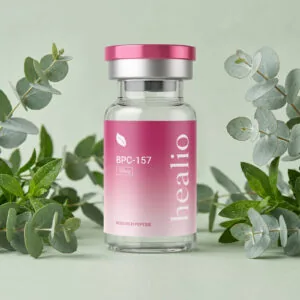 BPC-157
 vs NAD+: what is the difference?
BPC-157 is a signaling peptide studied in tendon, ligament, muscle and gut lining models, mostly for blood vessel formation and growth factor activity. NAD+ is a coenzyme that carries electrons in energy metabolism and feeds enzymes that handle DNA repair and cell signaling, such as the sirtuins and PARPs. One is a compound researchers add to a repair model to see what changes. The other is already inside every cell, and the research asks what happens when its levels move. They sit on different layers of biology, which is why most pages that line them up end up describing two unrelated things.
BPC-157 vs NAD+ side by side
The table holds the facts that rarely change, with BPC-157’s live data from the product and certificate pages. Searching bpc 157 vs nad+ or nad+ peptide vs bpc 157 gives the same two columns.
| BPC-157 | NAD+ | |
|---|---|---|
| What it is | A 15 amino acid peptide, derived from a protein in human gastric juice | A coenzyme, nicotinamide adenine dinucleotide. Not a peptide |
| Role studied | Tissue repair signaling, angiogenesis | Energy metabolism, DNA repair and sirtuin signaling |
| Typical research models | Tendon, ligament, muscle and gut lining models in animals | Cell biology, ageing models, human work on NAD+ precursors |
| Evidence type | Almost all preclinical | Well-characterized biology, with human trials of precursors |
| Size and price | 10mg vial, $59.99 | Varies by seller |
| Latest batch purity (HPLC) | 99.5% | Ask the seller for the batch report |
| Certificate | BPC-157 COA | Ask the seller for the certificate |
What BPC-157 is and what its research covers
BPC-157 stands for Body Protection Compound 157. The most useful single source is a 2025 systematic review in HSS Journal by Vasireddi and colleagues. They found 544 articles and kept 36, of which 35 were preclinical and one was a small retrospective clinical report. The animal findings are consistent, with activity in angiogenesis and growth pathways and lower inflammatory cytokines. What BPC-157 does in research explains the mechanism in plain language.
What NAD+ is and what its research covers
NAD+ has one of the deepest records in cell biology. Covarrubias and colleagues in Nature Reviews Molecular Cell Biology review how NAD+ metabolism feeds cellular processes during ageing, and the literature around it is large. The human work mostly concerns precursors. Martens and colleagues in Nature Communications found that chronic nicotinamide riboside supplementation was well tolerated and raised NAD+ in healthy middle-aged and older adults. That result is about a precursor and blood NAD+ levels, so it doesn’t tell you what a direct NAD+ preparation does in tissue. The mitochondrial peptides guide covers the compounds Healio Peptides lists in the same neighborhood.
NAD+ precursors and NAD+ itself
Most of the human NAD+ literature concerns precursors, compounds the body converts into NAD+. Nicotinamide riboside, the compound in the Martens trial, is one. A study that shows a precursor raising blood NAD+ is a different experiment from one that gives NAD+ directly, and what a direct preparation does in a particular tissue is a separate question that trial doesn’t answer. Pages that cite precursor trials to support a claim about NAD+ itself are borrowing evidence from the neighboring molecule, which is the same move that gets made for TB-500 and thymosin beta-4 on the peptide side.
Why NAD+ appears on peptide menus
It appears there by bundling. Clinics and wellness sites group “longevity” offerings together, and NAD+ sits beside peptides because it’s sold in the same channel. That placement carries no scientific meaning, since NAD+ and BPC-157 differ in chemistry, in mechanism and in the questions researchers ask of them. The cellular energy listings here are SS-31 and MOTS-c, both peptides studied in mitochondrial biology.
Why NAD+ and BPC-157 get compared at all
Both show up on longevity and recovery menus, and both are described with a similar vocabulary of “cellular repair.” The overlap in vocabulary is about all they share. NAD+ research asks about energy chemistry and the enzymes that depend on it. BPC-157 research asks about healing in an injured tissue. Nothing cited here tests the two together or connects NAD+ levels to the repair endpoints BPC-157 studies measure. If you’ve seen them recommended as a pair, treat that as a convention among clinics and not a finding.
Evidence tiers: what is established and what isn’t
NAD+ biology is well established: the coenzyme’s roles in metabolism and signaling are textbook material. What is not established is what raising NAD+ does in a specific tissue, and the human trial above reports a blood measurement. BPC-157 has the opposite profile: its repair effects are reported in animal models consistently, but the underlying biology is less settled and the human record is a single small retrospective report. The two are strong on different axes, and that, more than any ranking, is the comparison.
What the BPC-157 and NAD+ studies can’t tell you
A rodent repair model and a precursor trial in healthy adults measure unrelated things. Most of the animal repair work used male animals, and the NAD+ trials span different ages and conditions, so a woman framing her own research question should check each paper’s methods for who was studied. The BPC-157 research gap in women covers the repair side in detail.
When BPC-157 alone, and when to look at cellular energy
A question about tissue repair in a tendon, ligament or gut model maps onto BPC-157. A question about how cellular energy chemistry changes under stress or ageing maps onto the NAD+ literature or a mitochondrial peptide. A design that asks whether energy supply limits repair would need both areas, with controls for each, and nothing cited here has built it. It’s an open question, not a protocol.
BPC-157 COA: what a lab report shows, and what to ask for on NAD+
Every Healio Peptides batch is tested by an independent US laboratory before release, and the report is published before you order. This is the current BPC-157 batch.
| BPC-157 | |
|---|---|
| Batch | HEALIO-BPC157-2605 |
| Purity (HPLC) | 99.5% |
| Identity (ESI-MS) | Confirmed, conforms to the reference standard (1419.56) |
| Endotoxins (LAL) | Under 0.5 EU/mg (limit 5 EU/mg) |
For NAD+ from any seller, ask the same questions in a form that fits the molecule: a purity figure and the method behind it, an identity check, an endotoxin result, and a lot number that matches the vial. A coenzyme isn’t measured the same way as a peptide, so a certificate for NAD+ should name its method. Match lot numbers to the vial either way. Reading a peptide certificate of analysis explains the rows on a peptide report.
How to read an NAD+ claim
Three questions cut through most NAD+ pages. Is the claim about NAD+ itself or a precursor such as nicotinamide riboside? Is the evidence a blood level, a tissue measurement or a clinical outcome? And was the study run in cells, animals or people? A blood NAD+ increase in healthy adults, the Martens result, answers a narrow question. It doesn’t show an effect on repair, energy or ageing in a particular tissue, and a page that jumps from one to the other has skipped a step. The same discipline applies to the BPC-157 pages, where a rat result is a rat result.
BPC-157 price and format
Healio Peptides lists BPC-157 as a 10mg vial, lyophilized powder, at $59.99. It reconstitutes with bacteriostatic water for sale, added slowly down the vial wall with no shaking, and the BPC-157 calculator turns vial strength and water volume into a concentration. How to reconstitute peptides covers the handling.
Where to buy BPC-157 for research
Whatever you source, look for a published certificate before anything else. Every Healio Peptides BPC-157 batch ships with a third-party report, and orders go out from the United States. The BPC-157 listing carries the certificate before you order, and the peptides for healing category shows the neighboring repair compounds.
BPC-157 vs NAD+: frequently asked questions
Is NAD+ a peptide?
No. NAD+ is a coenzyme made of two nucleotides. It is often listed beside peptides on wellness menus, but it isn’t a chain of amino acids.
Is BPC-157 or NAD+ better?
Neither wins on the evidence. They answer unrelated research questions, one about tissue repair and one about cellular energy chemistry, so the right choice follows from what a study measures.
What should an NAD+ certificate show?
A purity figure with the method behind it, an identity check, an endotoxin result, and a lot number that matches the vial. A coenzyme is not measured the same way as a peptide, so the certificate should name its method.
Can BPC-157 and NAD+ be studied together?
Some pages pair them, but direct testing of the combination is missing from the literature cited here. Each compound’s record is separate.
Are BPC-157 and NAD+ FDA approved?
BPC-157 is not approved as a drug for human use. NAD+ is a naturally occurring molecule, and nothing on this page is a statement about any product’s legal status or medical advice. Healio Peptides sells BPC-157 strictly for laboratory research.
Which listings relate to cellular energy research?
The related listings are SS-31 and MOTS-c, both studied in mitochondrial biology. The BPC-157 vs SS-31 page compares the first with BPC-157.
More on BPC-157 and cellular energy
- MOTS-c benefits, a mitochondrial peptide Healio Peptides lists.
- Peptides for energy, the category around cellular energy research.
- BPC-157 vs TB-500, the pairing within repair research.
Healio Peptides supplies research compounds for laboratory use only. They are not for human or veterinary use, have not been evaluated by the FDA, and nothing on this page is medical advice.