
Put SS-31 and BPC-157 in a search bar and the first pages you get are written as if the two competed for the same job. They don’t. SS-31, also called elamipretide, is a four amino acid peptide that concentrates in the inner mitochondrial membrane, and the research around it is about cellular energy and oxidative balance. BPC-157 is a 15 amino acid peptide from a gastric protein, studied for tissue repair. The two meet only in the loose idea that injured tissue needs energy as well as scaffolding. This SS-31 vs BPC-157 comparison covers what each compound is, what the studies behind them cover, how their evidence differs, and what a batch lab report shows. Everything below describes laboratory research. The listings are linked as we go, and the mitochondrial peptides guide gives the wider picture.
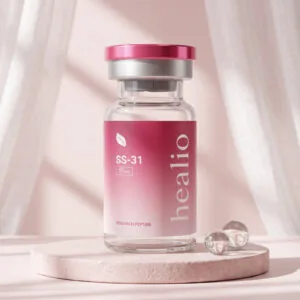 SS-31
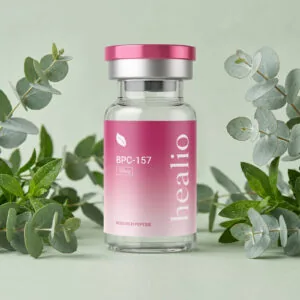 BPC-157
SS-31 vs BPC-157: what is the difference?
SS-31 targets a place: the inner mitochondrial membrane, where it is studied for how it interacts with a lipid called cardiolipin and what that does to energy production under stress. BPC-157 targets a process: tissue repair, through blood vessel formation and growth factor signaling. One is studied in models of mitochondrial dysfunction, ischemia and aging. The other is studied in models of tendon, ligament, muscle and gut injury. Neither is a substitute for the other, and the best-known comparison between them is the evidence each has behind it.
SS-31 vs BPC-157 side by side
The table holds the facts that rarely change, plus size, price and batch data pulled live from the product and certificate pages. Searching bpc 157 vs ss 31 or ss 31 vs bpc 157 gives the same two columns.
| SS-31 | BPC-157 | |
|---|---|---|
| Also known as | Elamipretide | Body Protection Compound 157 |
| What it is | A tetrapeptide that concentrates in the inner mitochondrial membrane | 15 amino acids, derived from a protein in human gastric juice |
| Main mechanism studied | Cardiolipin interaction, mitochondrial energy production, oxidative balance | Blood vessel formation, growth factor signaling |
| Typical research models | Ischemia, aging and mitochondrial disease models, plus human trials | Tendon, ligament, muscle and gut lining models |
| Evidence type | Animal and cell work, with a human clinical program | Almost all preclinical |
| Size at Healio Peptides | 10mg | 10mg |
| Price per vial | $54.99 | $59.99 |
| Latest batch purity (HPLC) | 99.6% | 99.5% |
| Certificate | SS-31 COA | BPC-157 COA |
What SS-31 is and what its research covers
Two papers show the shape of the SS-31 literature. Birk and colleagues in the Journal of the American Society of Nephrology studied how SS-31 interacts with cardiolipin to restore function in ischemic mitochondria. Campbell and colleagues in Free Radical Biology and Medicine found that it reversed age-related redox stress and improved exercise tolerance in aged mice. Both are rodent studies. SS-31 differs from most research peptides in that a clinical program exists around it: ReCLAIM-2 was a randomized phase II trial of elamipretide in age-related macular degeneration, and a 2026 review describes it as approved under accelerated approval for Barth syndrome. That approval covers a specific drug product for a specific disease, and it doesn’t extend to research-grade vials. The SS-31 peptide benefits page goes through the rest.
What BPC-157 is and what its research covers
The most useful single source on BPC-157 is a 2025 systematic review in HSS Journal by Vasireddi and colleagues. They found 544 articles and kept 36. Thirty-five were preclinical and one was a small retrospective clinical report. The reviewers described consistent animal findings: activity in pathways tied to angiogenesis and cell growth, and lower inflammatory cytokines. For the mechanism in plain language, see what BPC-157 does in research.
How the SS-31 and BPC-157 research models differ
The experiments don’t resemble each other. SS-31 studies measure mitochondrial output, oxidative stress markers, muscle performance on a treadmill, or kidney and heart function after an ischemic insult. The aged-mouse paper from Campbell and colleagues is typical: it asks whether the compound restores redox balance and exercise tolerance in old animals. BPC-157 studies measure healing in an injured tissue, such as tendon continuity, vessel formation or lesion size. One literature treats the cell’s engine, and the other treats a wound. A reader who sees them recommended together should ask what shared outcome a study would measure, because the existing papers don’t offer one.
Where energy and repair meet
The one honest link between the two is that repair costs energy. A tendon rebuilding itself, or a cell migrating into a wound, needs mitochondria working. Pages that pair SS-31 with BPC-157 lean on that logic, and it is a reasonable hypothesis to hold. It is a hypothesis. No paper cited here tests SS-31 and BPC-157 together, and no paper shows that improving mitochondrial function speeds the repair that BPC-157 studies measure. A comparison page that says the two “support each other” is describing a design idea. A closer research pairing is the mitochondrial peptide MOTS-c, covered in MOTS-c benefits.
SS-31 and MOTS-c: the other mitochondrial pairing
SS-31 is often listed with MOTS-c, and that pairing is closer in kind than SS-31 with BPC-157. Both are studied in mitochondrial biology. SS-31 works at the inner membrane, and MOTS-c is a peptide encoded in mitochondrial DNA, studied for metabolic signaling. Healio Peptides lists both, and the mitochondrial peptides guide sets them side by side. If your question is cellular energy, the nearer comparison is there. If it’s tissue repair, BPC-157 is the closer match, and SS-31 enters only as a secondary variable.
SS-31 vs BPC-157: how their evidence differs
This is the comparison that matters. SS-31 has human trials, at least in some conditions, and BPC-157 has one small retrospective report. A reader could take that to mean SS-31 is the better-established compound, and in one sense it is. The catch is that the human work concerns specific diseases under controlled conditions, and it says nothing about how a research-grade vial behaves in an unrelated model. BPC-157’s record is thicker in animals and thinner in people. The two sit at different stages of different questions, and ranking them would mean ignoring that.
What the SS-31 and BPC-157 studies can’t tell you
A mouse treadmill test and a rat tendon injury measure different things in different tissues, and neither maps neatly onto a human result. Most of the animal work on both compounds used male animals, so sex-stratified findings are scarce, and a woman framing her own research question should treat that evidence as missing. The BPC-157 literature also leans on a limited set of laboratories. The BPC-157 research gap in women covers that gap in detail.
When SS-31 alone, BPC-157 alone, or both
A study of mitochondrial function in aged or ischemic tissue maps onto SS-31. A study of tendon, ligament or gut repair maps onto BPC-157. A design that asks whether repair is limited by energy supply could use both, with single-compound arms alongside so any effect traces to its source. Two listings make that possible, since each vial can be reconstituted and set independently.
SS-31 and BPC-157 COA: what a lab report shows
Every Healio Peptides batch is tested by an independent US laboratory before release, and the report is published before you order. These are the current two.
| SS-31 | BPC-157 | |
|---|---|---|
| Batch | HEALIO-SS31-2613 | HEALIO-BPC157-2605 |
| Purity (HPLC) | 99.6% | 99.5% |
| Identity (ESI-MS) | Confirmed, conforms to the reference standard (639.79) | Confirmed, conforms to the reference standard (1419.56) |
| Endotoxins (LAL) | Under 0.5 EU/mg (limit 5 EU/mg) | Under 0.5 EU/mg (limit 5 EU/mg) |
Purity says how clean the powder is, and identity says it’s the molecule on the label. For a short, unusual peptide like SS-31 the identity line is the one to read closely. Match the batch and lot numbers to the vial. If certificates are new to you, reading a peptide certificate of analysis explains every row.
SS-31 vs BPC-157 price and format
Healio Peptides lists SS-31 as a 10mg vial and BPC-157 as a 10mg vial, both lyophilized powder. The two vials come to $114.98 at the lowest listed sizes. Both reconstitute with bacteriostatic water for sale, added slowly down the vial wall with no shaking, and the SS-31 calculator and BPC-157 calculator turn vial strength and water volume into a concentration. How to reconstitute peptides covers the handling.
Where to buy SS-31 and BPC-157 for research
Whichever SS-31 and BPC-157 supplier you use, look for a published certificate before anything else. Every Healio Peptides batch ships with a third-party report, and orders go out from the United States. The mitochondrial compound is the SS-31 listing, and the repair compound is the BPC-157 listing.
SS-31 vs BPC-157: frequently asked questions
Is SS-31 or BPC-157 better?
Neither wins on the evidence. SS-31 is studied for mitochondrial function and BPC-157 for tissue repair, and the right choice follows from what a study measures.
What is the difference between SS-31 and BPC-157?
SS-31 is a tetrapeptide that concentrates in the inner mitochondrial membrane and is studied for cellular energy. BPC-157 is a 15 amino acid peptide from a gastric protein studied for tissue repair.
Can SS-31 and BPC-157 be studied together?
Some researchers pair them on the idea that repair needs energy, but direct testing of the pair is missing from the literature cited here. They’re two separate listings, so a study can set its own design.
Is SS-31 the same as elamipretide?
Yes. SS-31 is the research name for the compound also called elamipretide. A clinical drug product and a research vial are different things, and Healio Peptides supplies the research compound for laboratory use only.
Are SS-31 and BPC-157 FDA approved?
BPC-157 is not approved as a drug. Elamipretide has been reported as approved under accelerated approval for one rare disease, a specific drug product that doesn’t cover research vials. Nothing on this page is medical advice.
How does SS-31 compare with MOTS-c?
Both are studied for mitochondrial biology, from different angles. The MOTS-c benefits page covers the other compound, and the mitochondrial peptides guide sets them side by side.
More on SS-31 and BPC-157
- BPC-157 vs NAD+, repair against cellular energy chemistry.
- BPC-157 vs TB-500, the pairing people search most.
- Peptides for energy, the category SS-31 sits in.
Healio Peptides supplies research compounds for laboratory use only. They are not for human or veterinary use, have not been evaluated by the FDA, and nothing on this page is medical advice.