
Semaglutide vs tirzepatide is the one weight-loss comparison in this class where the question has been tested head to head. Semaglutide acts on the GLP-1 receptor. Tirzepatide acts on two receptors, GIP and GLP-1. Two randomized trials have put them in the same study, one in people with type 2 diabetes and one in adults with obesity and no diabetes, and both found tirzepatide ahead on weight. This page lays out what those trials measured, what they can and can’t show, and what a lab report shows for the research vials. Everything below describes laboratory research and published trials, and nothing here is medical advice.
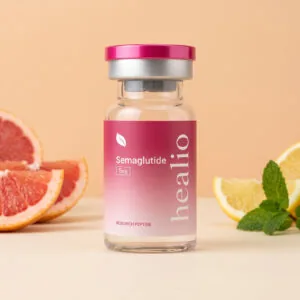 Semaglutide
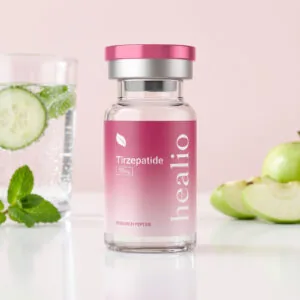 Tirzepatide
Semaglutide vs tirzepatide: what is the difference?
Semaglutide is a selective GLP-1 receptor agonist. Tirzepatide is a dual agonist of the glucose-dependent insulinotropic polypeptide (GIP) receptor and the GLP-1 receptor. So the structural difference is the GIP receptor: tirzepatide has it and semaglutide doesn’t. In the head-to-head trials, tirzepatide produced larger weight reductions. What the extra receptor contributes to that gap, compared with other differences between the molecules and the dose ranges, isn’t something a trial like this can separate.
Semaglutide vs tirzepatide side by side
The table holds the published facts, plus size, price and batch data pulled live from the product and certificate pages.
| Semaglutide | Tirzepatide | |
|---|---|---|
| Receptors | GLP-1 | GIP and GLP-1 |
| Head-to-head in obesity (SURMOUNT-5) | -13.7% weight at 72 weeks | -20.2% weight at 72 weeks |
| Head-to-head in type 2 diabetes (SURPASS-2) | Comparator arm, 40 weeks | Superior on HbA1c at all three arms |
| Placebo-controlled obesity trial | STEP 1, 1,961 adults, 68 weeks | SURMOUNT-1, 2,539 adults, 72 weeks |
| Size and price | 5mg and 10mg vials, from $79.99 | 10mg and 15mg and 30mg vials, from $54.99 |
| Latest batch purity (HPLC) | 99.4% | 99.4% |
| Certificate | Semaglutide COA | Tirzepatide COA |
The head-to-head trial in obesity
SURMOUNT-5 in the New England Journal of Medicine randomized 751 adults with obesity and no type 2 diabetes to the maximum tolerated dose of tirzepatide or semaglutide for 72 weeks. Mean weight change was -20.2% with tirzepatide and -13.7% with semaglutide, and waist circumference fell 18.4 cm against 13.0 cm, both significant. More of the tirzepatide group reached weight reductions of 10, 15, 20 and 25 percent. The most common adverse events in both arms were gastrointestinal, mostly mild to moderate and concentrated in dose escalation. It was open-label and funded by Eli Lilly, which is how the sponsor of one compound ran a trial of both.
The head-to-head trial in type 2 diabetes
SURPASS-2 in the New England Journal of Medicine randomized 1,879 people with type 2 diabetes to three levels of tirzepatide or to semaglutide for 40 weeks. Tirzepatide was noninferior and superior on HbA1c at all three levels, and weight reductions were greater, with estimated differences of -1.9, -3.6 and -5.5 kg across the three. Nausea, diarrhea and vomiting were the most common adverse events, and serious adverse events were reported in 5 to 7 percent of tirzepatide patients against 3 percent on semaglutide. This one was also open-label and Lilly-funded.
The placebo-controlled trials behind each compound
STEP 1 for semaglutide randomized 1,961 adults with overweight or obesity to 68 weeks of treatment or placebo plus lifestyle intervention, and found -15.3 kg against -2.6 kg, with 50.5 percent reaching a 15 percent loss or more. SURMOUNT-1 for tirzepatide randomized 2,539 adults over 72 weeks and found -20.9% in the top arm against -3.1% on placebo. These are separate trials, so only the head-to-heads settle the direct question. They also show how much the answer depends on the endpoint and the population.
Why a head-to-head matters more than two placebo trials
Comparing STEP 1 and SURMOUNT-1 directly means comparing two trials that differ in duration, enrollment rules, lifestyle support and how each handled participants who stopped treatment. A head-to-head removes most of that: both arms start together, follow the same schedule and are measured the same way. That is why SURMOUNT-5 carries more weight on the direct question than any subtraction of the two earlier results, and why its -20.2% against -13.7% is the figure to quote for the pair. The earlier trials remain the best source for what each compound did against placebo.
Quality of life and post hoc analyses
The SURMOUNT-5 data have since been mined for secondary findings. A 2026 paper in Diabetes, Obesity and Metabolism reported improved health-related quality of life with tirzepatide against semaglutide in adults with obesity or overweight, and a post hoc analysis in the American Journal of Medicine looked at how early rapid weight loss related to efficacy and safety for both compounds. Post hoc analyses generate hypotheses and aren’t a substitute for the primary result, so they are worth reading as pointers and not as conclusions.
What the GIP receptor adds
The trials report an outcome, and the mechanism behind it is inferred. GIP receptor activation is the thing tirzepatide has and semaglutide lacks, and it’s the obvious candidate for the weight gap. But the two molecules also differ in other ways, including their dose ranges, so the gap can’t be assigned to the GIP receptor alone from these trials. Isolating it would take a design built for that question, which isn’t what either trial did.
What the trials can and can’t show
What they show: in adults with obesity, tirzepatide produced larger weight reductions than semaglutide at 72 weeks, at maximum tolerated doses, in an open-label design. In type 2 diabetes, tirzepatide beat semaglutide on HbA1c and weight at 40 weeks. What they can’t show: that a different population, a different dose, or a different duration would give the same gap, or that either compound is right for a given person. Open-label designs also leave room for expectation effects on self-reported outcomes, though weight and HbA1c are measured values. Both head-to-heads were funded by the maker of tirzepatide.
Reading headlines about the head-to-head trials
Headlines about SURMOUNT-5 usually quote the 20.2 against 13.7 percent figure and stop. The details sit in the abstract: the doses were the maximum tolerated for each compound, the design was open-label, the follow-up was 72 weeks, and the sponsor was the maker of tirzepatide. None of that undoes the result, since weight is a measured value and the gap was large and significant. It does mean the figure describes adults with obesity and no diabetes under that protocol, and a different population or protocol could give a different gap. Read the number with its conditions attached.
Semaglutide vs tirzepatide in women’s research
The abstracts for these trials don’t give sex-stratified outcomes, so a woman framing her own question will want the breakdowns from the full papers. Women are well represented in the broader literature on these compounds, and the semaglutide for women and tirzepatide for women pages go through what the studies reported in that setting. The peptides for weight loss in women guide covers the wider context.
What the semaglutide and tirzepatide studies can’t tell you about research vials
Trials of the pharmaceutical products can’t be transferred to research-grade vials, and nothing here is guidance for any use. Trial participants followed set titration schedules under clinical supervision. Regulatory status is the regulator’s to state, and this page makes no statement about it for either compound. The tirzepatide vs Ozempic page covers why brand names change the question.
Semaglutide and tirzepatide COA: what the lab reports show
Every Healio Peptides batch is tested by an independent US laboratory before release, and the report is published before you order. These are the current two.
| Semaglutide | Tirzepatide | |
|---|---|---|
| Batch | HEALIO-SEMA10-2607 | HEALIO-TIRZ-2604 |
| Purity (HPLC) | 99.4% | 99.4% |
| Identity (ESI-MS) | Confirmed, conforms to the reference standard (4113.58) | Confirmed, conforms to the reference standard (4813.45) |
| Endotoxins (LAL) | Under 0.5 EU/mg (limit 5 EU/mg) | Under 0.5 EU/mg (limit 5 EU/mg) |
Both are long peptides, so identity is the row to read closely. Purity says how clean the powder is, and identity says it holds the molecule on the label. Match the batch and lot numbers to the vial. Reading a peptide certificate of analysis explains every row.
Semaglutide vs tirzepatide vial strengths and price
Healio Peptides lists semaglutide in 5mg and 10mg vials and tirzepatide in 10mg and 15mg and 30mg vials, both lyophilized powder. Vial strengths differ between the two, so compare cost per milligram and not per vial: semaglutide’s lowest listing is $16.00 per mg and tirzepatide’s is $5.50 per mg. Both reconstitute with bacteriostatic water for sale, and the semaglutide calculator and tirzepatide calculator turn vial strength and water volume into a concentration. How to reconstitute peptides covers the handling.
Where to buy semaglutide and tirzepatide for research
Whichever supplier you use, look for a published certificate before anything else. Every Healio Peptides batch ships with a third-party report, and orders go out from the United States. Start with the semaglutide for sale and tirzepatide for sale pages, both of which carry the certificate before you order. The peptides for weight loss category shows the rest of the range.
Semaglutide vs tirzepatide: frequently asked questions
What is the difference between tirzepatide and semaglutide?
Semaglutide activates the GLP-1 receptor. Tirzepatide activates both the GLP-1 and GIP receptors.
Is tirzepatide stronger than semaglutide?
In the head-to-head trials, tirzepatide produced larger weight reductions: -20.2% against -13.7% at 72 weeks in adults with obesity, and greater HbA1c and weight reductions in type 2 diabetes. Both trials were open-label and funded by the maker of tirzepatide.
What does the GIP receptor do?
It is the extra target tirzepatide has. The trials show larger weight loss with tirzepatide, but they can’t show how much of that gap the GIP receptor accounts for.
Is there a head-to-head trial of the two?
Yes, two: SURMOUNT-5 in adults with obesity, and SURPASS-2 in people with type 2 diabetes.
What did the trials report as the most common adverse events?
Gastrointestinal events, mostly mild to moderate and concentrated during dose escalation: nausea, diarrhea and vomiting in SURPASS-2, and similar events in both arms of SURMOUNT-5.
Are the research vials the same as the medications?
No. Trials of the pharmaceutical products don’t transfer to research-grade vials. Healio Peptides sells both compounds strictly for laboratory research, and nothing on this page is medical advice.
More on semaglutide and tirzepatide
- Retatrutide vs tirzepatide, the dual agonist against the triple agonist.
- Retatrutide vs semaglutide, the triple agonist against the selective GLP-1 agonist.
- Liraglutide vs semaglutide, the daily compound against the weekly one.
Healio Peptides supplies research compounds for laboratory use only. They are not for human or veterinary use, have not been evaluated by the FDA, and nothing on this page is medical advice.