

Are peptides safe is one of the most searched questions in this category and one of the least well answered. Most of the content addressing it splits neatly into two camps: vendors who say yes without qualification, and general-interest articles that say no without engaging with what is actually known.
Neither is useful, because safety is not a property a molecule has. It is a conclusion drawn from evidence about a specific compound, at a specific quantity, in a specific population, for a specific purpose. This guide covers what safety means in research terms, which peptides have been evaluated and which have not, where the real risks in this market sit, and why the honest answer to the headline question is more uncomfortable than either camp admits.
Are peptides safe? The honest short answer
There is no single answer, because peptides are a structural category rather than a class of compounds with shared properties. Asking whether peptides are safe is like asking whether liquids are safe. Insulin is a peptide. So is a compound with no human data of any kind. The category tells you almost nothing.
The answerable question is narrower: what does the research say about this specific compound, at this quantity, in this population? For most compounds sold as research peptides, the honest answer is that the safety data does not exist in humans.
That is not a claim of danger. It is a statement about the state of the evidence, and it is a different thing from a reassurance.
What safety actually means in research terms
Safety in a regulatory or clinical sense is not a yes or no verdict. It is a structured body of evidence built in stages, and each stage answers a different question.
Preclinical work in cells and animals looks for obvious toxicity signals before anything reaches people. Early human trials study tolerability in small groups. Larger trials compare outcomes against a control across bigger populations and longer periods. Post-approval monitoring catches rare effects that trials were too small to detect.
Each stage narrows the range of what remains unknown. A compound described as having an established safety profile has usually passed through all of them for a defined indication, in a defined population, at defined quantities. Change any of those variables and the profile does not automatically travel with you.
This is why the tesamorelin case is instructive. It holds approval for one narrow indication in one clinical population, as the tesamorelin research in women sets out. That approval is real, and it says nothing about use outside that indication.
Which peptides have human safety data and which do not
The compounds in this catalog sit at very different points on that ladder, and lumping them together is the mistake that makes the headline question unanswerable.
| Evidence stage | What exists | Examples in this category |
|---|---|---|
| Approved formulations | Full clinical development for a stated indication | Tirzepatide, semaglutide, tesamorelin |
| Investigational | Active clinical trials, no approval | Retatrutide |
| Preclinical or mechanistic | Cell and animal models only | BPC-157, TB-500, KPV, MOTS-c, SS-31 |
| Historical or limited literature | Older or narrow published work | Epitalon, pinealon, selank |
The top row has genuine human safety data attached to specific approved products and indications. The bottom two rows do not, and no amount of anecdote substitutes for it.
The distinction that gets flattened most often: an approved medication and a research compound sharing a molecule are not the same product. Different formulation, different regulatory status, different supervision, different intended use. The metabolic compound comparison explains where that line falls.
Are peptides safe for women? The specific evidence gap
This deserves its own section because the gap is real and rarely acknowledged.
Historically, a great deal of preclinical research was conducted in male animal models, and early human trial populations frequently skewed male. That has improved considerably, but the legacy remains: for many compounds in this category, sex-specific data is thin or absent, and subgroup analysis is not always published even where it exists.
What that means practically is that for a large number of these compounds, nobody can tell you what the research says about women specifically, because the research does not say. The evidence on women and peptides goes through it compound by compound.
Hormonal context adds another layer. Peptides that interact with hormonal signaling operate in a system that changes across the menstrual cycle and across life stages. What is established across the perimenopause transition and for women over 50 is very little.
Where the real risk in the peptide market sits
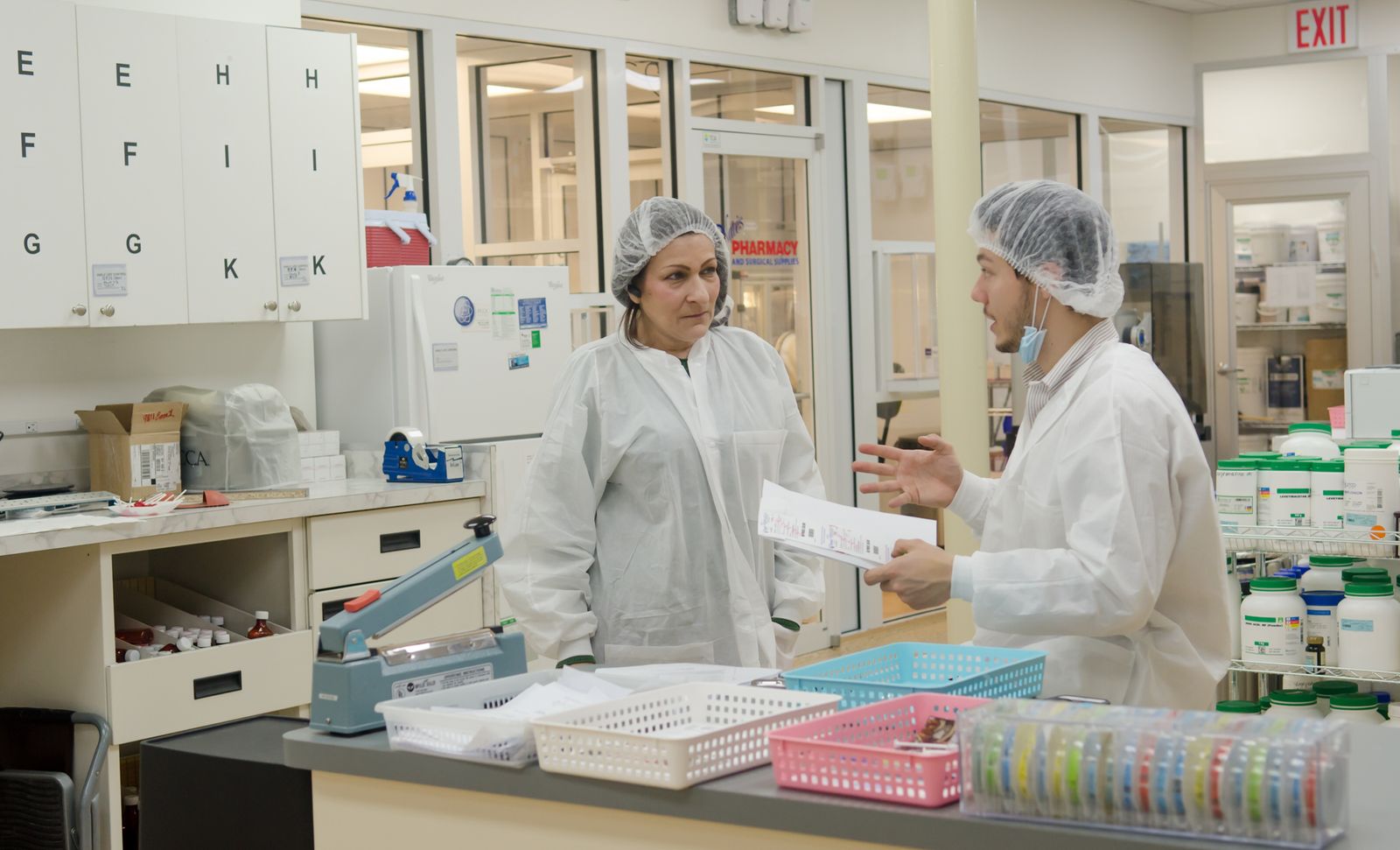
Here is the part that gets least attention and probably matters most. For a large share of the market, the primary risk is not the molecule. It is not knowing what is in the vial.
Peptides are supplied as an indistinguishable white powder. Nothing about the appearance of a vial tells you the sequence is correct, the purity is what was claimed, or that contaminants from synthesis were adequately removed. A compound with an excellent research profile is irrelevant if the vial contains something else.
This is why independent batch testing is the load-bearing part of sourcing rather than a marketing badge. A batch-specific certificate of analysis from a named laboratory, stating purity by HPLC and confirming identity by mass spectrometry, with a lot number matching the vial. Each field on a certificate of analysis does a job, and Healio publishes every batch document before purchase.
The failure modes are specific and common: a generic COA not tied to a lot, a purity figure with no stated method, testing performed in-house rather than independently, or no documentation offered at all. The peptide supplier comparison lays out how those standards vary.
Why most peptides never get a safety evaluation
The obvious follow-up question is why the data is missing, and the answer is structural rather than scientific.
Human safety data comes from clinical trials. Clinical trials are enormously expensive, take years, and require a sponsor willing to fund them. Sponsors fund trials when there is a commercial return at the end, which in practice means a patentable compound with a defined market and a regulatory pathway.
Most compounds in this category fail that test. Some are old enough that composition patents expired long ago. Some are naturally occurring sequences that were never patentable in the first place. Some target conditions too small or too diffuse to build a development program around. Whatever the reason, no sponsor appears, and without a sponsor the compound stays where it is.
The consequence is that a compound can sit at the animal-model stage for decades, accumulating citations and interest without ever accumulating human data. Volume of published mentions is not the same as depth of evidence, and the two are easy to confuse when a compound has a long paper trail.
This also explains an asymmetry that looks strange at first. The compounds with the most human safety data are frequently the newest ones, because they came through modern commercial development. The ones with the longest research history often have the least, because their history is preclinical. The longevity compound overview covers several examples of exactly that shape.
Approved medications and research compounds are not the same product
This distinction carries more weight than any other in the safety conversation, and it is the one most often blurred.
An approved medication is a specific formulation, manufactured to pharmaceutical standards, supplied through a regulated channel, prescribed and monitored by a clinician, for a stated indication in a defined population. The safety data attaches to that entire package, not to the molecule floating free of it.
A research compound sharing the same molecule is a different product. Different manufacturing standard, different formulation, no clinical supervision, no approved indication, and supplied for laboratory work. It is not a generic version of the medication and it is not an equivalent obtained by a different route.
Reading a trial safety profile as though it describes a research vial removes every variable that made the profile meaningful. The trial studied a specific product, at specific quantities, in a specific population, with monitoring in place. None of those conditions transfer. The tesamorelin approval is a case where that gap is unusually wide.
What research grade does and does not guarantee
Research grade describes a manufacturing and testing standard. It says the compound was produced and verified to a specification suitable for laboratory work.
It is not a safety designation. It is not a claim about human use. It does not mean the compound has been evaluated for any purpose in people, and it is not a softer synonym for pharmaceutical grade. The research grade standard sets out what it actually certifies.
The distinction matters because the phrase is frequently deployed as reassurance. Verified identity and purity is exactly what you want from a supplier and exactly what it sounds like. It is a statement about the contents of the vial, not about what happens to anyone who uses it.
Questions worth asking instead of are peptides safe
Because the headline question cannot be answered as asked, these are the ones that can be.
- What stage of research is this specific compound at? Approved, investigational, or preclinical only.
- In what population was it studied, and for what purpose? Findings do not transfer across either.
- Does sex-specific data exist? For many compounds it does not.
- Can this batch be verified? Independent, batch-specific, method-stated.
- What is the source of the claim being made? A published trial, an animal model, or a vendor page.
Each of these has an answer. The headline question does not, which is why it keeps producing content that satisfies nobody.
Are peptides safe: frequently asked questions
Are peptides safe to use?
The category is too broad for a single answer. Some peptides have approved formulations with full clinical safety data for narrow indications. Most compounds sold as research peptides have no human safety evaluation at all, which is a statement about missing evidence rather than a finding of harm.
Are peptides safe for weight loss?
Certain metabolic compounds have approved formulations studied in clinical trials for specific indications under medical supervision. Research compounds sharing those molecules are not those products. Peptides for weight loss explains where that distinction sits.
Are copper peptides safe?
GHK-Cu has a long research history in wound repair and skin contexts, and cosmetic formulations are regulated as cosmetics. That regulatory framework covers topical cosmetic products, not research compounds. Copper peptides for skin is where those two categories separate.
Does research grade mean safe?
No. Research grade describes a manufacturing and testing standard for laboratory use. It certifies identity and purity, not safety in humans, and it is not a softer version of pharmaceutical grade.
Why is there so little safety data on most peptides?
Human safety data comes from clinical trials, which are expensive and require a commercial or academic sponsor. Most compounds in this category never had one, so they remain at the cell and animal model stage indefinitely.
What is the biggest risk when sourcing peptides?
Not knowing what is in the vial. Peptides are visually indistinguishable powders, so verification depends entirely on batch-specific independent testing. Healio publishes every batch document before purchase.
Referenced in this area, each with its batch certificate published before purchase: BPC-157. Everything else in this area sits in the full catalogue.
An unsatisfying answer is still the accurate one
The truthful response to are peptides safe is that it depends entirely on which peptide, and that for most of them the evidence needed to answer does not exist. That is a worse answer than either the vendors or the critics offer, and it is the one the literature supports. What can be controlled is verification, and that is where sourcing standards earn their place. Every batch in the healing collection and the women’s wellness collection carries independent testing published before purchase.
Related reading
- Can Women Take Peptides?, the sex-specific evidence gap in detail.
- What Is a Peptide?, why the category is too broad to generalize about.
- How to Read a Certificate of Analysis, the verification that actually reduces risk.
- Best Peptide Companies in 2026, how sourcing standards differ across the market.