Free Shipping on All Orders Over $185

The Blog · August 18, 2026

How to Choose a Peptide Supplier: 5 Checks That Matter

A woman reviewing printed documents outdoors

Choosing a peptide supplier is mostly an exercise in evaluating claims you cannot personally verify, about a product you cannot personally inspect, in a market with no licensing requirement. That is an uncomfortable position, and pretending otherwise does nobody any favors.

It is also more tractable than it sounds, because the things that separate a careful supplier from a careless one are observable before you buy. This guide is a checklist: what documentation to demand, what claims should make you walk away, what the operational signals are, and which questions actually get useful answers. It covers supplier evaluation rather than compound selection, and nothing here is guidance for personal use.

Why choosing a peptide supplier is harder than it should be

Three structural facts about this market create the difficulty, and none of them are going away.

Lyophilized peptides are visually identical. A correct sequence at high purity, an incorrect sequence, and an inert filler all present as white powder in a vial. No inspection distinguishes them.

There is no licensing requirement to sell research compounds, which means the barrier to entering this market is a website and an inventory. Some entrants are serious operations and some are not, and the storefronts look similar.

Most compounds have no established human outcome, so a bad batch produces no obvious signal. In a category with a clear expected effect, quality failures announce themselves. Here they are silent, which BPC-157 sourcing shows most clearly, being the worst affected compound.

Together these remove nearly every feedback mechanism that normally polices product quality. What remains is documentation.

The documentation standard that separates suppliers

This is the core of the evaluation, and it is not negotiable.

Batch-specific certificates of analysis. Tied to a lot number that matches the vial you receive. A document covering some other batch tells you a different vial once passed testing.

Independent testing by a named laboratory. The laboratory should be identifiable. In-house testing is a manufacturer grading its own homework, which is not worthless and is not independent verification.

Purity by a stated method. HPLC is standard. A percentage with no method attached has no basis for comparison against anything.

Identity by mass spectrometry. Purity says how much of the material is one substance. Mass spec says whether that substance is the right one. Publishing purity alone is the more common half-measure.

Published rather than available on request. This is a genuine differentiator. Publishing openly means every document is exposed to scrutiny permanently. Available on request means each is disclosed individually to people who already paid. A certificate of analysis sets out reading the documents themselves.

Claims that should end the evaluation

Certain statements tell you enough to stop, because a supplier willing to misdescribe one thing has demonstrated something about how they describe everything.

Therapeutic claims. Anything asserting a compound treats, cures or prevents a condition. The claims framework explains why compliant suppliers do not do this.

Human dosing protocols. A supplier providing administration guidance is describing human use, which contradicts research-use supply directly.

Approved medications and research compounds conflated. Presenting a research vial as equivalent to a prescription product sharing its molecule.

Preclinical results stated as human outcomes. Animal and cell model findings described as though they establish effects in people. The evidence tier distinction goes through the distinction.

Guarantees of results. Nobody can guarantee an outcome from a compound with no human trial data. The guarantee is evidence the seller is not tracking what the research says.

Sample containers arranged in a bright modern laboratory

Operational signals worth checking

Beyond documentation, a set of practical markers indicate whether an operation is genuinely running or merely appearing to.

None of these are decisive individually. Several failing at once is a pattern rather than a coincidence.

What pricing actually tells you

Price is the signal buyers weight most heavily and read least well.

Peptide synthesis costs money, and independent third-party testing costs money per batch. Both are real, unavoidable expenses for a supplier doing the work properly. A price substantially below the market has removed a cost from somewhere.

Testing is the easiest cost to remove invisibly. Synthesis quality is the second. Neither removal is apparent to the buyer, which is precisely why the saving is available.

The reverse inference does not hold either. High pricing does not demonstrate quality, since anyone can charge more. Price is only informative at the bottom of the range, where it indicates that something has been cut, and uninformative everywhere else. Comparing peptide suppliers lays out how the market actually distributes.

Questions that get useful answers

Contacting a supplier before ordering is the single most underused evaluation step. These five questions are answerable by anyone running a real operation.

Can I see the COA for the lot currently shipping? Not a sample document, the current one.

Which laboratory performs your testing? A name, not a category.

Is identity confirmed by mass spectrometry as well as HPLC purity? This one separates suppliers quickly.

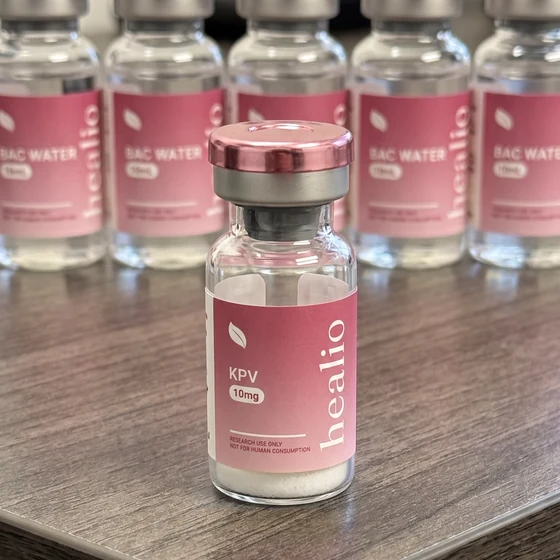
What is the vial strength and presentation? Basic, and a surprising number of pages are ambiguous about it.

How is material stored before shipping? Peptide storage conditions are why this matters.

The content of the answers matters. So does whether an answer arrives at all, and how long it takes.

What a supplier’s product pages reveal

Before contacting anyone, the product pages themselves carry a surprising amount of signal if read for structure rather than content.

Is the vial strength stated unambiguously? A page that names a compound without stating how much is in the vial has omitted the single most basic specification. Everything downstream, including the arithmetic in a peptide reconstitution calculator, depends on that figure.

Is the presentation described? Lyophilized powder, sealed vial, and any stated storage condition. A page silent on form is a page written by someone who has not handled the product.

Are research findings attributed? Description of what studies examined, rather than assertions about what the compound does. The evidence tier framework walks through why that distinction is the whole game.

Is the evidence stage acknowledged? A page treating a preclinical compound identically to one with approved formulations has flattened a distinction that matters enormously. Research grade certifies material quality, which is independent of evidence depth.

Is copy duplicated across compounds? Near-identical descriptions swapped between products indicate template filling rather than knowledge. This is easy to spot by reading two pages consecutively and is unusually revealing.

Consistency across a supplier’s whole site

A single page can be written carefully. A whole site being consistent is harder to fake and therefore more informative.

Check whether the compound descriptions contradict each other. A compound described as well studied on its own page and as investigational in a comparison article means nobody is maintaining coherence, and coherence is what documentation discipline looks like from the outside.

Check whether the research-use framing holds everywhere or only where it is legally convenient. A site with careful disclaimers on product pages and enthusiastic claims in its blog has segmented its honesty by page type.

Check whether the same standard of evidence is applied to compounds the supplier does and does not stock. A supplier that describes its own inventory generously and competitors’ compounds skeptically is marketing, not informing. Honest content states plainly when a discussed compound is not stocked, as the peptide supplier comparison does.

Reviews, forums and why they mislead here

Social proof is close to useless in this category, and it is worth understanding why rather than merely being told so.

A review reports an experience. In a category where most compounds have no established human outcome, there is nothing objective for that experience to be measured against. The reviewer cannot know what was in the vial either, which means the review is a report about an unknown substance.

Forum consensus compounds the problem rather than solving it. Many people reporting on unverified material produces a large volume of uninterpretable data, not a reliable signal. Positive reports about a supplier shipping mislabelled product would look exactly like positive reports about a supplier shipping correct product.

What is worth reading in reviews is the operational content: whether orders arrived, whether documentation was provided, whether support responded. Those are verifiable claims about a business. Claims about compound effects are not.

How Healio approaches this

Stated plainly so it can be checked rather than taken on trust.

Every batch document is published openly rather than supplied on request. Products are described in terms of what the research literature reports, not what they will do for anyone. No dosing protocols are published anywhere on the site. Approved medications are distinguished from research compounds sharing a molecule, as with the tesamorelin research in women.

Prices, reviews and certain checkout details are still being finalized on this site, which is worth saying rather than implying otherwise. The about page details who is behind the operation, and the FAQ covers the routine questions.

The point of listing these is not that they are remarkable. It is that they are checkable, which is the only kind of claim worth making in this market.

How to choose a peptide supplier: frequently asked questions

How do you choose a peptide supplier?

Evaluate documentation before anything else: batch-specific certificates of analysis from a named independent laboratory, purity by a stated method, identity by mass spectrometry, and published openly rather than available on request.

What should a peptide supplier’s COA include?

A lot number matching the vial, a named testing laboratory, purity measured by HPLC, and identity confirmed by mass spectrometry. The batch certificate of analysis sets out each field in plain language.

Is cheap peptide pricing a red flag?

At the bottom of the market, yes. Synthesis and independent per-batch testing are unavoidable costs, and a price well below the field has removed one of them. High pricing proves nothing in the other direction.

Are peptide supplier reviews useful?

Only for operational claims. Whether orders arrived and documentation was provided is verifiable. Claims about compound effects are not, since the reviewer cannot know what was in the vial and most compounds have no established human outcome.

What claims should make you avoid a supplier?

Therapeutic claims, human dosing protocols, conflating approved medications with research compounds, presenting preclinical findings as human results, and guaranteeing outcomes for compounds with no trial data.

Does published testing matter more than available on request?

Yes, meaningfully. Publishing exposes every document to permanent scrutiny. Available on request discloses documents individually to people who have already paid, which is a much weaker commitment.

Why can you not just inspect the product?

Lyophilized peptides are visually identical whether the sequence is correct, incorrect, or absent entirely. There is no sensory check available, which is why documentation carries the entire verification burden.

Should a supplier provide dosing guidance?

No. Research compounds are supplied for laboratory work, and providing human administration guidance contradicts that directly. A supplier doing so has stepped outside the framework they are selling under.

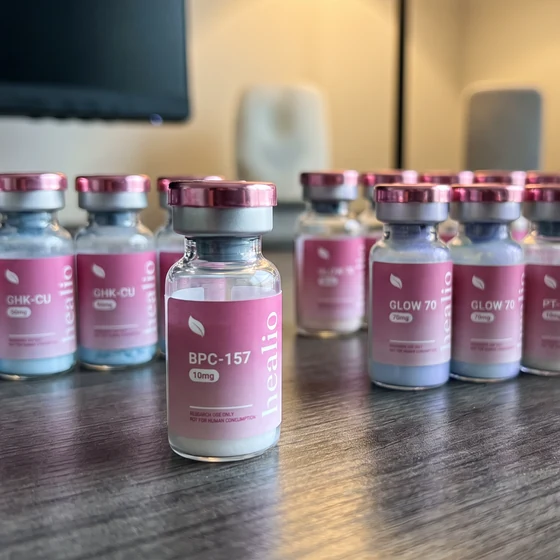
Compounds referenced in this research area, each shipped with a batch certificate published before purchase: BPC-157, GHK-Cu, retatrutide. The full range sits in the full catalogue.

Judge the paperwork, not the presentation

Every supplier in this market has a professional-looking site, because professional-looking sites are inexpensive. Batch-specific independent testing is not inexpensive, which is exactly what makes it a useful signal. Ask for the current lot’s certificate before you order and most of the evaluation resolves itself. Every batch across the healing collection and the weight loss collection is documented before purchase.

Related reading