
MOTS-c and SS-31 both get filed under mitochondrial peptides, and that label hides the interesting part: they approach the mitochondrion from opposite directions. MOTS-c is a 16 amino acid peptide that the mitochondrial genome itself encodes, and it works as a signal sent out from the organelle. SS-31 is a synthetic compound that goes in, binding a phospholipid on the inner mitochondrial membrane. This MOTS-c vs SS-31 comparison covers what each one is, what the published studies found, including a mix of positive and disappointing human trials for SS-31, and what a batch lab report shows. Everything below describes laboratory research.
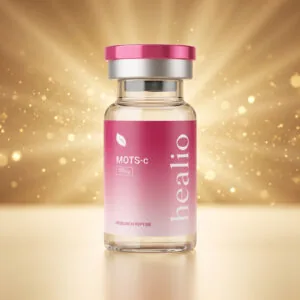 MOTS-c
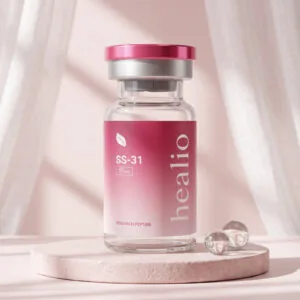 SS-31
MOTS-c vs SS-31: what is the difference?
MOTS-c is studied as a metabolic signal: it targets skeletal muscle, activates AMPK, and moves into the nucleus under metabolic stress. SS-31, also called elamipretide, is studied as a structural protector: it binds cardiolipin, keeps the cristae of the inner membrane intact, and supports oxidative phosphorylation. One is a message from the mitochondrion to the rest of the cell. The other is a repair tool for the mitochondrion’s own membrane. Search it as SS-31 vs MOTS-c and the distinction is the same.
MOTS-c vs SS-31 side by side
The table holds the facts that rarely change, plus size, price and batch data pulled live from the product and certificate pages.
| MOTS-c | SS-31 | |
|---|---|---|
| Origin | Encoded in the mitochondrial genome (12S rRNA), 16 amino acids | Synthetic aromatic-cationic tetrapeptide |
| Direction | Signals out from the mitochondria | Acts on the inner mitochondrial membrane |
| Mechanism studied | AMPK activation, folate cycle, nuclear gene expression | Cardiolipin binding, cristae structure, oxidative phosphorylation |
| Main models | Mouse metabolic and cell studies | Animal ischemia and aging models, plus clinical trials |
| Size at Healio Peptides | 10mg | 10mg |
| Price per vial | $59.99 | $54.99 |
| Latest batch purity (HPLC) | 99.2% | 99.6% |
| Certificate | MOTS-c COA | SS-31 COA |
MOTS-c: a signal sent out from the mitochondria
The discovery paper is Lee and colleagues in Cell Metabolism, who found a short open reading frame inside the mitochondrial 12S rRNA that encodes MOTS-c. They reported that it regulates insulin sensitivity, targets skeletal muscle, inhibits the folate cycle to activate AMPK, and in mice prevented age-dependent and diet-induced insulin resistance and diet-induced obesity. Kim and colleagues in Cell Metabolism followed with a finding that MOTS-c translocates to the nucleus under metabolic stress and regulates nuclear gene expression, interacting with stress-responsive transcription factors such as NRF2. A 2023 review in Frontiers in Endocrinology notes that the peptide’s plasma level decreases with age but that no effective way of applying it in the clinic has been developed. The site’s MOTS-c research benefits page goes through the rest.
SS-31: a compound sent in to the membrane
Szeto’s review in the British Journal of Pharmacology describes SS-31 as the first cardiolipin-protective compound: it binds cardiolipin, stops it converting cytochrome c into a peroxidase, protects the structure of the cristae and promotes oxidative phosphorylation. Birk and colleagues in the Journal of the American Society of Nephrology showed it re-energizing ischemic mitochondria. In the aging-muscle setting, Campbell and colleagues treated aged female mice for eight weeks and reported reversed age-related decline in mitochondrial ATP production, restored redox balance and improved treadmill endurance. The SS-31 peptide benefits page covers the same work in plain language.
SS-31 vs MOTS-c: the human record is lopsided and mixed
This is where the two literatures differ most. SS-31 has human trials, and the picture they paint is mixed. In the phase I/II MMPOWER study, adults with primary mitochondrial myopathy given the highest elamipretide level walked 64.5 m farther at day 5 against 20.4 m for placebo, with a p value of 0.053. The larger phase 3 MMPOWER-3 trial then found no improvement over placebo in the 6-minute walk or fatigue scores at 24 weeks, while confirming it was well tolerated. ReCLAIM-2 in age-related macular degeneration did not meet its primary endpoints but showed slowing of a retinal surrogate, ellipsoid zone loss. A 2026 review reports the FDA granted elamipretide accelerated approval for Barth syndrome in September 2025, with a confirmatory trial required. MOTS-c’s published record in the sources cited here is preclinical and review material. A researcher choosing between them is choosing between a compound with a clinical history of uneven results and one with an appealing mechanism and no equivalent trials.
Where MOTS-c and SS-31 overlap
Both concern mitochondrial function and both show up in aging-muscle conversations, which is the reason they’re so often discussed together. The overlap ends there. MOTS-c research asks how a mitochondrial peptide changes cell and whole-body metabolism, while SS-31 research asks how to protect or restore the organelle’s membrane under stress. A design that wants to probe a metabolic signal and a membrane-protection effect in the same model could use the two as separate arms. No paper cited here tests them together, and pages that call them a “stack” are describing an idea, not a result. The NAD+ question that appears next to them in searches has its own page, BPC-157 vs NAD+, which explains why a coenzyme is a different category from a peptide, and the wider mitochondrial peptides guide covers the family.
How to read MOTS-c and SS-31 protocol pages
Search results for this pair are full of protocol pages and video explainers that describe a mitochondrial “stack” with a clean story: one compound signals the cell to adapt, the other protects the machinery. It is a tidy narrative, and a narrative is what it is. The mechanism papers above support each half separately in animals and cells. They don’t test the two together, and the human trials belong to SS-31 alone, with uneven results. When a page tells you how the two combine, ask which study measured the combination.
MOTS-c vs SS-31 in women’s research
The SS-31 aging-muscle study above used female mice, which is useful: Campbell’s team reported the endurance and redox findings in 26-month-old females. The MOTS-c discovery and nuclear papers used mice and cells, and the abstracts cited don’t break results out by sex. A woman framing her own question will want to read each paper’s methods for animal sex, and to treat any result from male-only models as a hypothesis for female physiology, not a finding. The women’s wellness peptides category shows the neighboring compounds.
What the MOTS-c and SS-31 studies can’t tell you
Mouse metabolism isn’t human metabolism, and MOTS-c’s clinical application is still undeveloped according to the 2023 review. SS-31’s trials were run in patients with defined diseases, such as mitochondrial myopathy or macular degeneration, so a negative or marginal result in one disease says little about an aging-muscle model, and a positive animal result says little about a human trial. The MMPOWER-3 trial is the clearest reminder: a mechanism that looks convincing in animals did not move a six-minute walk in people. Treat everything here as a statement about published papers, not a prediction.
MOTS-c and SS-31 COA: what the lab reports show
Every Healio Peptides batch is tested by an independent US laboratory before release, and the report is published before you order. These are the current two.
| MOTS-c | SS-31 | |
|---|---|---|
| Batch | HEALIO-MOTSC-2603 | HEALIO-SS31-2613 |
| Purity (HPLC) | 99.2% | 99.6% |
| Identity (ESI-MS) | Confirmed, conforms to the reference standard (2174.59) | Confirmed, conforms to the reference standard (639.79) |
| Endotoxins (LAL) | Under 0.5 EU/mg (limit 5 EU/mg) | Under 0.5 EU/mg (limit 5 EU/mg) |
Purity says how clean the powder is, and identity says it holds the molecule on the label. MOTS-c at 16 amino acids has more room for synthesis errors than SS-31’s four, so its identity line deserves the closer read. Match the batch and lot numbers to the vial. Reading a peptide certificate of analysis explains every row.
MOTS-c vs SS-31 price and format
Healio Peptides lists MOTS-c as a 10mg vial and SS-31 as a 10mg vial, both lyophilized powder. At the listed prices MOTS-c comes to $6.00 per mg and SS-31 to $5.50 per mg, a rough guide at best, since a 16 amino acid peptide and a tetrapeptide don’t cost the same to make. The two together come to $114.98 as separate vials. Both reconstitute with bacteriostatic water for sale, and the MOTS-c calculator and SS-31 calculator turn vial strength and water volume into a concentration. How to reconstitute peptides covers the handling.
Where to buy MOTS-c and SS-31 for research
Whichever supplier you use, look for a published certificate before anything else. Every Healio Peptides batch ships with a third-party report, and orders go out from the United States. Start with the MOTS-c for sale and SS-31 for sale pages, both of which carry the certificate before you order. The anti-aging peptides category shows the neighboring compounds.
MOTS-c vs SS-31: frequently asked questions
Is MOTS-c or SS-31 better?
Neither wins on the evidence. MOTS-c is studied as a metabolic signal and SS-31 as a membrane protector, and no paper tests the two against each other. The better fit depends on whether a model is built to read metabolism or mitochondrial structure.
What is the difference between MOTS-c and SS-31?
MOTS-c is a 16 amino acid peptide encoded in mitochondrial DNA that signals to the nucleus and muscle. SS-31 is a synthetic tetrapeptide that binds cardiolipin on the inner mitochondrial membrane.
Can MOTS-c and SS-31 be studied together?
Researchers pair them because the mechanisms look complementary, but direct testing of the combination is missing from the papers cited here. They can be sourced as two separate vials so each arm can be set on its own.
Which has more human trial data, MOTS-c or SS-31?
SS-31, under the name elamipretide. Its trials have been mixed, with a positive phase I/II result, a negative phase 3 in mitochondrial myopathy, and a missed primary endpoint in macular degeneration.
Are MOTS-c and SS-31 FDA approved?
Nothing on this page is a statement about any product’s legal status or medical advice. The 2026 review cited above reports an accelerated approval for elamipretide in a rare disease, which says nothing about research-grade vials. Healio Peptides sells both compounds strictly for laboratory research.
Do MOTS-c and SS-31 reviews tell me anything useful?
Reviews mix different products, sources and expectations, so they say little about any one vial. A batch certificate says more: it ties a purity and identity result to a lot number you can check.
More on MOTS-c and SS-31
- BPC-157 vs SS-31, mitochondria research against tissue repair research.
- GHK-Cu vs GLOW, another single compound set against a blend.
- Peptides for energy and focus, what each compound was studied for.
Healio Peptides supplies research compounds for laboratory use only. They are not for human or veterinary use, have not been evaluated by the FDA, and nothing on this page is medical advice.