
Search for BPC-157 and you’ll find CJC-1295 and ipamorelin sitting beside it in the same listicles, the same clinic pages and the same forum threads, as if they were three versions of one idea. They aren’t. BPC-157 is a repair-model peptide. CJC-1295 and ipamorelin belong to the growth hormone axis, where they act on the pituitary through two different receptors. This BPC-157 vs CJC-1295 and ipamorelin comparison covers what each compound is, what the studies behind them cover, why the two research areas rarely overlap, and what to ask of a lab report for any of them. Everything below describes laboratory research. The BPC-157 side below carries live data from the product and certificate pages, and the other side is written from the published literature.
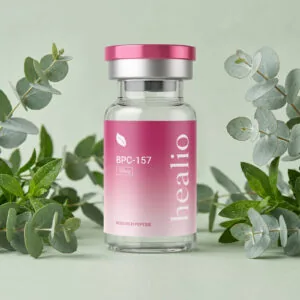 BPC-157
 vs CJC-1295 and ipamorelin: what is the difference?
BPC-157 is a 15 amino acid peptide derived from a protein in gastric juice, studied for blood vessel formation and tissue repair in animal models. CJC-1295 is a long-acting analog of growth hormone-releasing hormone (GHRH). Ipamorelin is a ghrelin mimetic, a selective growth hormone secretagogue. Both of those two are about signaling to the pituitary gland and the hormones that follow, so the research questions around them are endocrine. BPC-157’s are about tissue. Putting them side by side compares a repair-model compound with a pair of endocrine-axis compounds, which is why most pages that try it end up describing three separate things.
BPC-157 vs CJC-1295 and ipamorelin side by side
The table holds the facts that rarely change, with BPC-157’s live data from the product and certificate pages. Searching bpc 157 vs cjc 1295 or cjc 1295 vs bpc 157 gives the same columns.
| BPC-157 | CJC-1295 and ipamorelin | |
|---|---|---|
| What it is | 15 amino acids, derived from a protein in human gastric juice | CJC-1295: a long-acting GHRH analog. Ipamorelin: a ghrelin mimetic |
| Main system studied | Tissue repair, angiogenesis, growth factor signaling | The growth hormone axis, through two different pituitary receptors |
| Typical research models | Tendon, ligament, muscle and gut lining models in animals | Endocrine studies, including human trials of each compound |
| Evidence type | Almost all preclinical | Rodent work plus small human studies for each |
| Size and price | 10mg vial, $59.99 | Varies by seller |
| Latest batch purity (HPLC) | 99.5% | Ask the seller for the batch report |
| Certificate | BPC-157 COA | Ask the seller for the certificate |
What BPC-157 is and what its research covers
BPC-157 stands for Body Protection Compound 157. The most useful single source is a 2025 systematic review in HSS Journal by Vasireddi and colleagues, who kept 36 studies from 544 articles. Thirty-five were preclinical and one was a small retrospective clinical report. The animal picture is consistent, with activity in angiogenesis and growth pathways and lower inflammatory cytokines, and it is an animal picture. For the mechanism in plain language, see what BPC-157 does in research.
What CJC-1295 and ipamorelin are, and what their research covers
CJC-1295 has a human endocrine study behind it: Teichman and colleagues in the Journal of Clinical Endocrinology and Metabolism reported prolonged stimulation of growth hormone and IGF-I secretion in healthy adults. Ipamorelin was first described as the first selective growth hormone secretagogue in a 1998 European Journal of Endocrinology paper by Raun and colleagues. It has since been tested as a ghrelin mimetic in postoperative ileus, in a rodent model and in a small randomized proof-of-concept trial. Those are real human data points, and they are about hormone signaling and gut motility. They say nothing about tendon or wound repair. The growth hormone peptides guide covers the wider family, and Tesamorelin vs CJC-1295 and Tesamorelin vs ipamorelin compare them with the GHRH analog Healio Peptides does list.
How CJC-1295 and ipamorelin differ from each other
The two get written as one unit, and they aren’t one. CJC-1295 is a growth hormone-releasing hormone analog, built to last longer in the body than the natural hormone, and it acts on the GHRH receptor. Ipamorelin mimics ghrelin and acts on the growth hormone secretagogue receptor, and the 1998 paper that introduced it described selectivity as its main feature, meaning it stimulated growth hormone release without much effect on other pituitary hormones in that work. Two receptors, two mechanisms, one downstream hormone. That is the reasoning behind pairing them, and it’s the same kind of argument that gets made for BPC-157 and TB-500 in repair research: complementary mechanisms, thin direct testing of the combination.
Why research endpoints don’t line up
A BPC-157 study reports tendon strength, vessel density, lesion size. A CJC-1295 or ipamorelin study reports growth hormone and IGF-I levels, or gut motility in the ileus work. There’s no shared endpoint to compare, which is why any claim that one is stronger than the other has nothing to rest on. A design that wanted to test a repair outcome under a hormone background would have to be built from scratch, and the papers cited here don’t do that.
Why these compounds keep getting paired with BPC-157
The pairing is a recovery narrative. Tissue repair is local work, hormone signaling sets a body-wide background, and a story that combines the two is easy to tell. It is a story, though, and the evidence for it is thin. No paper cited here tests BPC-157 together with CJC-1295 or ipamorelin, so the combination rests on each compound’s separate record. Clinic pages and listicles that present the three as a standard stack are describing a convention, and a convention is different from a finding. The nickname for BPC-157 plus TB-500 is the Wolverine stack, and some pages stretch it to four compounds by adding these two, which is another reason it pays to ask what a given page means by the name.
Evidence tiers: where each compound stands
The comparison favors the growth hormone peptides on one point that matters. CJC-1295 and ipamorelin each have human data, however limited, and BPC-157 has one small retrospective report. That doesn’t make the endocrine compounds better for any given study. Human data in a different domain says little about a tendon model. It does mean the honest summary differs: the endocrine pair has a thin human record in its own field, and BPC-157 has a thicker animal record in a different one. Any page that ranks one over the other has skipped that step.
What the BPC-157, CJC-1295 and ipamorelin studies can’t tell you
None of these papers tests a repair outcome in response to a growth hormone secretagogue, and none tests a hormone outcome in response to BPC-157. Growth hormone secretion also differs between the sexes, so a study should check whether the sources it relies on report results by sex. For BPC-157 the same gap holds: most of the animal repair work used males. The BPC-157 research gap in women goes through it.
BPC-157 COA: what a lab report shows, and what to ask for on the others
Every Healio Peptides batch is tested by an independent US laboratory before release, and the report is published before you order. This is the current BPC-157 batch.
| BPC-157 | |
|---|---|
| Batch | HEALIO-BPC157-2605 |
| Purity (HPLC) | 99.5% |
| Identity (ESI-MS) | Confirmed, conforms to the reference standard (1419.56) |
| Endotoxins (LAL) | Under 0.5 EU/mg (limit 5 EU/mg) |
The same four lines are what to ask for from any seller of CJC-1295 or ipamorelin: purity by HPLC, identity by mass spectrometry, an endotoxin result, and a lot number that matches the vial. Identity matters more for CJC-1295 than most, because the name can refer to more than one form of the compound, and a certificate is the place the exact molecule is stated. Reading a peptide certificate of analysis walks through each row.
Related compounds and guides on this site
For growth hormone axis research, the tesamorelin listing covers a stabilized GHRH analog, and the site’s existing comparisons set it against both compounds: Tesamorelin vs CJC-1295 and Tesamorelin vs ipamorelin. On the repair side, BPC-157 sits beside TB-500, KPV and GHK-Cu. If your design spans both areas, those are the related listings.
BPC-157 price and format
Healio Peptides lists BPC-157 as a 10mg vial, lyophilized powder, at $59.99. It reconstitutes with bacteriostatic water for sale, added slowly down the vial wall with no shaking, and the BPC-157 calculator turns vial strength and water volume into a concentration. How to reconstitute peptides covers the handling.
Where to buy BPC-157 for research
Whatever you source, look for a published certificate before anything else. Every Healio Peptides BPC-157 batch ships with a third-party report, and orders go out from the United States. The BPC-157 listing carries the certificate before you order, and the peptides for healing category shows the neighboring repair compounds.
BPC-157 vs CJC-1295 and ipamorelin: frequently asked questions
Is BPC-157 or CJC-1295 better?
Neither wins on the evidence. They answer unrelated research questions, one about tissue repair and one about the growth hormone axis. The right choice follows from what a study measures.
What is the difference between CJC-1295 and ipamorelin?
CJC-1295 is a long-acting GHRH analog and ipamorelin is a ghrelin mimetic, so they act through different pituitary receptors. That difference is why they get discussed together in the growth hormone literature.
What should a CJC-1295 or ipamorelin certificate show?
Purity by HPLC, identity by mass spectrometry, an endotoxin result, and a lot number that matches the vial. For CJC-1295 the identity line matters most, since the name can refer to more than one form of the compound.
Can BPC-157 be studied with CJC-1295 and ipamorelin?
Some researchers pair them, but direct testing of the combination is missing from the literature cited here. Each compound’s record is separate.
Are these compounds FDA approved, and is there human safety data?
BPC-157 is not approved as a drug, and the 2025 HSS review found one small clinical study. CJC-1295 and ipamorelin have small human trials, and none of the three should be treated as established for human use. Nothing on this page is medical advice, and Healio Peptides sells BPC-157 for laboratory research only.
Which has more human data?
CJC-1295 and ipamorelin each have published human studies, within their own endocrine and gut-motility fields. BPC-157 has one small retrospective clinical report. The studies answer different questions.
More on BPC-157 and the growth hormone peptides
- BPC-157 vs sermorelin, another GHRH analog set against a repair peptide.
- The tesamorelin and ipamorelin blend, how the two are discussed together.
- BPC-157 vs TB-500, the pairing within repair research.
Healio Peptides supplies research compounds for laboratory use only. They are not for human or veterinary use, have not been evaluated by the FDA, and nothing on this page is medical advice.