
KPV and TB-500 are two of the four compounds inside KLOW 80, and they are about as different as two peptides can be. KPV is three amino acids, the tail end of a hormone called alpha-MSH, studied for how it quiets inflammatory signaling in the gut and skin. TB-500 is sold as a fragment of thymosin beta-4, a 43 amino acid protein, studied for how cells move and how wounds close. This KPV vs TB-500 comparison covers what each one is, what the studies found, where the two touch in the same blend, and what the batch lab reports show. Everything below describes laboratory research.
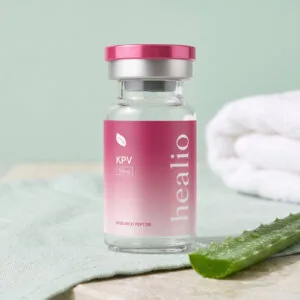 KPV
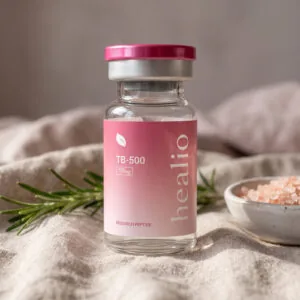 TB-500
KPV vs TB-500: what is the difference?
KPV is studied for inflammation: how a tripeptide enters intestinal cells and reduces inflammatory signaling in mouse colitis models. TB-500 is studied for repair biology: actin binding, cell migration, angiogenesis and wound healing in animal models. One asks what turns the inflammatory signal down. The other asks what helps cells reach and rebuild damaged tissue. The overlap is that damaged tissue is usually inflamed, so a model of injury can involve both, which is why the two share a blend.
KPV vs TB-500 side by side
The table holds the facts that rarely change, plus size, price and batch data pulled live from the product and certificate pages. Searched as TB500 vs KPV or KPV vs TB-500, the table is the same.
| KPV | TB-500 | |
|---|---|---|
| Origin | Three amino acids, the tail of alpha-MSH | A fragment of thymosin beta-4, a 43 amino acid protein |
| Main mechanism studied | Inflammatory signaling, PepT1 uptake into intestinal cells | Actin binding, cell migration, angiogenesis |
| Strongest research area | Intestinal and skin inflammation models | Wound repair and migration models |
| Evidence type | Mouse and cell models | Animal models, plus trials of the parent protein |
| Size at Healio Peptides | 10mg | 10mg |
| Price per vial | $44.99 | $74.99 |
| Latest batch purity (HPLC) | 99.6% | 99.1% |
| Certificate | KPV COA | TB-500 COA |
What KPV is and what its research covers
KPV is the C-terminal tripeptide of alpha-MSH: lysine, proline, valine. Dalmasso and colleagues in Gastroenterology showed that KPV enters intestinal cells through the PepT1 transporter and reduced inflammation in mouse colitis. Kannengiesser and colleagues in Inflammatory Bowel Diseases reported anti-inflammatory activity in two murine models of inflammatory bowel disease, and Xiao and colleagues in Molecular Therapy loaded KPV into hyaluronic acid nanoparticles and found combined effects on mucosal healing and inflammation in a mouse model of ulcerative colitis. All three are rodent or cell studies. The KPV peptide benefits page goes through the rest.
What TB-500 is and what its research covers
Start with the protein it comes from. Sosne and colleagues in the FASEB Journal describe thymosin beta-4 as a 43 amino acid protein and the major actin-sequestering molecule in cells, with a short sequence containing LKKTETQ, the central actin-binding domain, linked to angiogenesis, wound healing and cell migration. Philp and colleagues in Wound Repair and Regeneration found the parent protein accelerated dermal repair in diabetic and aged mice, and that the seven amino acid LKKTETQ peptide promoted repair in the aged animals comparably. Goldstein and colleagues’ 2015 review summarizes the clinical trials of the parent protein. The TB-500 research benefits page covers the rest.
Where KPV and TB-500 meet: KLOW and wound models
The two meet in one product. KLOW 80 holds 10mg of each alongside 50mg of GHK-Cu and 10mg of BPC-157, so a KLOW result involves both an inflammatory signal and a migration signal. A wound model has both too, which is the logic behind putting them together. It’s a design rationale and not a result. No paper cited here tests KPV with TB-500, and the KLOW vs KPV page explains why a blend result can’t be pinned on one ingredient. Keeping them as two listings lets a study set each arm on its own.
KPV and TB-500 in gut versus wound models
The two literatures use different tools. The KPV papers lean on chemically induced colitis in mice, and Dalmasso’s work ties the effect to PepT1 uptake into intestinal cells. The TB-500 side uses dermal wound models in diabetic and aged animals, with contracture and collagen deposition as endpoints. The same word, injury, covers an inflammation readout in one literature and a closure readout in the other, so a result from one can’t stand in for the other.
When KPV alone, TB-500 alone, or both
A question about the inflammatory signal in a gut or skin model maps onto KPV. A question about cell migration or wound closure maps onto TB-500. A design that wants both in one injury model could use the two vials as separate arms with a combined arm, so any effect can be traced to its source. The BPC-157 vs KPV and BPC-157 vs TB-500 pages cover the third compound in the blend from each side.
Thymosin beta-4 and TB-500: what carries over and what doesn’t
TB-500 searches blur two things, the 43 amino acid protein and the fragment sold as a vial. The protein has the larger literature, including the clinical trials Goldstein’s review summarizes. The fragment’s own record is the short active-site work: Sosne’s review of the sequences within thymosin beta-4, and Philp’s finding that the seven amino acid LKKTETQ peptide promoted repair in aged mice comparably to the parent. Reading across from a trial of the whole protein to a fragment vial is an assumption, and a reader should know when a page makes it. The thymosin beta-4 page covers the parent protein.
Reading forum threads on KPV and TB-500
Threads comparing the two usually come from people sorting out a routine, and they report how a person felt. That’s a fair record of an experience, and it can’t separate a compound’s effect from expectation, timing or everything else going on. The papers are the better filter: for any claim, find the study, check which compound it used, in which species, and which endpoint it measured. Where the answer is a mouse colitis model, the claim is a mouse colitis claim, and where it is a diabetic mouse wound, it is a wound claim.
KPV vs TB-500 in women’s research
Gut and skin inflammation and wound healing are areas where women researchers frequently start, and the KPV papers don’t report results by sex in the abstracts cited here. The TB-500 wound work used diabetic and aged mouse models, and the abstracts don’t break results out by sex either. A woman framing her own question will want sex-stratified data, and for both peptides it is scarce. The BPC-157 research gap in women covers the equivalent problem on the repair side.
What the KPV and TB-500 studies can’t tell you
A mouse colitis model is not human bowel disease, and a diabetic mouse wound is not a human wound. Xiao’s nanoparticle paper tested KPV in a delivery system, which isn’t how a lyophilized vial is used. The 2003 mouse study doesn’t reach into the fragment sold as a vial, and trials of the whole protein can’t be read as trials of a fragment. Neither literature tests the two compounds against each other, so a statement that one is stronger is a statement about two separate sets of papers.
KPV and TB-500 COA: what the lab reports show
Every Healio Peptides batch is tested by an independent US laboratory before release, and the report is published before you order. These are the current two.
| KPV | TB-500 | |
|---|---|---|
| Batch | HEALIO-KPV-2608 | HEALIO-TB500-2612 |
| Purity (HPLC) | 99.6% | 99.1% |
| Identity (ESI-MS) | Confirmed, conforms to the reference standard (342.44) | Confirmed, conforms to the reference standard |
| Endotoxins (LAL) | Under 0.5 EU/mg (limit 5 EU/mg) | Under 0.5 EU/mg (limit 5 EU/mg) |
Purity says how clean the powder is, and identity says it holds the molecule on the label, which matters for a tripeptide as small as KPV, where a wrong residue is hard to spot by eye. Match the batch and lot numbers to the vial. Reading a peptide certificate of analysis explains every row.
KPV vs TB-500 price and format
Healio Peptides lists KPV as a 10mg vial and TB-500 as a 10mg vial, both lyophilized powder. At the listed prices KPV comes to $4.50 per mg and TB-500 to $7.50 per mg, a rough guide at best, since a tripeptide and a longer fragment don’t cost the same to make. The two together come to $119.98 as separate vials. Both reconstitute with bacteriostatic water for sale, and the KPV calculator and TB-500 calculator turn vial strength and water volume into a concentration. How to reconstitute peptides covers the handling.
Where to buy KPV and TB-500 for research
Whichever supplier you use, look for a published certificate before anything else. Every Healio Peptides batch ships with a third-party report, and orders go out from the United States. Start with the KPV for sale and TB-500 for sale pages, both of which carry the certificate before you order. The peptides for healing category shows the neighboring compounds.
KPV vs TB-500: frequently asked questions
Is KPV or TB-500 better?
Neither wins on the evidence. KPV is studied for inflammatory signaling and TB-500 for cell migration and repair, and no paper tests the two against each other. The better fit depends on what a model is built to measure.
What is the difference between KPV and TB-500?
KPV is a three amino acid fragment of alpha-MSH. TB-500 is sold as a fragment of thymosin beta-4, a 43 amino acid protein.
Can KPV and TB-500 be studied together?
Researchers pair them because the mechanisms look complementary, but direct testing of the combination is missing from the papers cited here. They can be sourced as two vials, or inside KLOW 80, which also holds GHK-Cu and BPC-157.
Which has more human data, KPV or TB-500?
The parent protein of TB-500 has clinical trials that a 2015 review summarizes, though the fragment sold as TB-500 isn’t the subject of those trials. The KPV papers cited here are rodent and cell studies.
Are KPV and TB-500 FDA approved?
Nothing on this page is a statement about any product’s legal status or medical advice. Healio Peptides sells both for laboratory research only, and the studies described here are published research, not guidance.
Do KPV and TB-500 reviews tell me anything useful?
Reviews mix different products, sources and expectations, so they say little about any one vial. A batch certificate says more: it ties a purity and identity result to a lot number you can check.
More on KPV and TB-500
- KLOW vs KPV, the blend against one of its ingredients.
- TB-500 vs thymosin alpha-1, two thymosins with different jobs.
- Peptides for inflammation, what each compound was studied for.
Healio Peptides supplies research compounds for laboratory use only. They are not for human or veterinary use, have not been evaluated by the FDA, and nothing on this page is medical advice.