
Most of a GLOW vial is GHK-Cu. Of the 70mg of powder, 50mg is the copper peptide and the other 20mg is BPC-157 and TB-500 at 10mg each, which puts GHK-Cu at roughly 71 percent of the contents by mass. That one fact answers most of what people mean when they search GHK-Cu vs GLOW peptide: the blend is a copper peptide vial with two repair compounds added to it. This comparison covers what each product is, what the research behind the extra compounds covers, what each batch certificate shows, and how the formats and prices line up. Everything below describes laboratory research. The listings are linked as we go, for anyone sourcing for a study in the peptides for skin and beauty category.
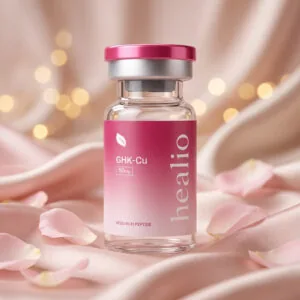 GHK-Cu
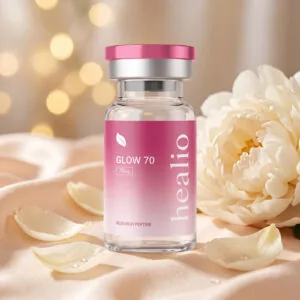 GLOW Peptide Blend
GHK-Cu vs GLOW: what is the difference?
GHK-Cu is one compound: the tripeptide glycyl-histidyl-lysine bound to a copper(II) ion, studied for skin remodeling, collagen and elastin signaling, and tissue repair. GLOW 70 is a three-compound vial holding 50mg of GHK-Cu, 10mg of BPC-157 and 10mg of TB-500. The difference is the added 20mg. BPC-157 brings blood vessel and growth factor research into the vial, and TB-500 brings cell migration research. Whether the three do anything together that GHK-Cu doesn’t do alone has not been tested in any paper cited on this page.
If you came here asking whether GLOW is “stronger,” the question has no answer yet, because strength depends on what a study measures. A skin collagen assay is a GHK-Cu question. A tendon repair model asks about the other two.
GHK-Cu vs GLOW side by side
The table holds the facts that rarely change, plus size, price and batch data pulled live from the product and certificate pages. Searching glow peptide vs ghk cu or ghk vs glow gives you the same two columns.
| GHK-Cu | GLOW 70 | |
|---|---|---|
| What is in the vial | GHK-Cu only | GHK-Cu 50mg, BPC-157 10mg, TB-500 10mg |
| GHK-Cu share by mass | All of it | About 71 percent (50mg of 70mg) |
| Main research areas | Skin remodeling, collagen and elastin signaling, tissue repair | Those, plus blood vessel formation and cell migration models |
| Evidence type | Mostly laboratory research, identified in 1973 | Each component studied alone, the combination not |
| Size at Healio Peptides | 50mg and 100mg | 70mg |
| Price per vial | from $34.99 | $104.99 |
| Latest batch purity (HPLC) | 99.4% | 99.3% |
| Certificate | GHK-Cu COA | GLOW 70 COA |
What GHK-Cu is and what its research covers
GHK-Cu is the best-documented part of the blend, and the reason it carries most of the weight. Two reviews give the clearest overview. The human tri-peptide GHK and tissue remodeling, published in the Journal of Biomaterials Science in 2008, sets out the peptide’s role in tissue remodeling. A decade later, a review in the International Journal of Molecular Sciences revisited its regenerative and protective actions against newer gene expression data. Both list Pickart first, and a literature that leans on a small group of authors deserves a careful read for that reason. The copper-peptide history and the findings are covered in GHK-Cu peptide benefits, and the older story in copper peptides.
What the extra BPC-157 and TB-500 add to GLOW
The 20mg that separates GLOW from plain GHK-Cu is the Wolverine pair, 10mg of each. BPC-157 is a 15 amino acid peptide studied for blood vessel formation and growth factor signaling. A 2025 systematic review in HSS Journal kept 36 BPC-157 studies, 35 of them preclinical and one a small retrospective clinical report. TB-500 is a synthetic fragment of thymosin beta-4, studied for actin binding and cell migration. The fuller side-by-side is on the BPC-157 vs TB-500 page. What matters for this comparison is the mismatch in evidence. GHK-Cu has decades of skin and tissue work behind it, and the two additions mostly have animal data in orthopedic and wound models.
What GLOW means on a label
GLOW is a trade nickname, and nobody enforces a recipe. A seller can print it on a vial holding a different ratio of the same three compounds, or a different set of compounds entirely, which is part of why GHK-Cu vs GLOW comparisons from different sources don’t always agree. At Healio Peptides, GLOW 70 means exactly 50mg of GHK-Cu, 10mg of BPC-157 and 10mg of TB-500, and the certificate for each batch confirms every component by mass spectrometry. When you compare numbers across sellers, compare the milligrams per component first and the name second.
GHK-Cu vs GLOW vs KLOW: where the third blend fits
People searching ghk cu vs glow vs klow are usually weighing three vials, and the structure is a ladder. GHK-Cu is the base. GLOW adds BPC-157 and TB-500 to it. KLOW 80 adds 10mg of KPV on top of GLOW, which takes it to 80mg and puts GHK-Cu at 62.5 percent of the contents. KPV is a three amino acid fragment of alpha-MSH, studied for inflammatory signaling in gut and skin models. The step between the last two rungs gets its own treatment in GLOW vs KLOW.
What the GHK-Cu and GLOW studies can’t tell you
A blend creates an attribution problem. Suppose a study using the 50:10:10 mix saw a change in a skin or tissue model. Nothing in the result would say which of the three compounds produced it, or whether it took all three. The ratio itself comes from the product design, and none of the papers cited here tests that ratio. A single-compound vial avoids the problem, which is a sensible reason to start a study with GHK-Cu alone and add compounds one at a time. It also means every statement about GLOW borrows from three separate literatures.
How to read a GLOW research summary
Vendor pages and forum threads often describe GLOW as one thing with one set of effects. Read them with a simple filter. For every claim, ask which of the three compounds the cited paper actually studied. A paper on GHK-Cu and skin tells you about the 50mg component. A paper on BPC-157 in a rat tendon tells you about a 10mg component in a different tissue. Neither describes the vial. Citations that name the blend itself are the ones to look for, and in this literature they’re rare. The same filter works for any blend, KLOW included, and it takes about a minute per claim.
GHK-Cu and GLOW research in women
Skin remodeling is the research area that most often brings women to GHK-Cu, so the single compound is the closer match to a skin question. GLOW widens the frame to repair models, where most of the animal work was built on male subjects and sex-stratified results are rare. That gap is worth knowing before reading a blend’s research summary as if it applied across the board. The best peptides for skin guide and peptide stacks for women both go through what the research does and doesn’t show.
GHK-Cu and GLOW COA: what a lab report shows
Every Healio Peptides batch is tested by an independent US laboratory before release, and the report is published before you order. These are the current two.
| GHK-Cu | GLOW 70 | |
|---|---|---|
| Batch | HEALIO-GHKCU01 | HEALIO-GLOW70-2617 |
| Purity (HPLC) | 99.4% | 99.3% |
| Identity (ESI-MS) | Confirmed, conforms to the reference standard (403.93) | Confirmed for each component |
| Endotoxins (LAL) | Under 0.05 EU/mg (limit 5 EU/mg) | Under 0.5 EU/mg (limit 5 EU/mg) |
For a blend, the identity line is the one to read. It says each component was confirmed, which is the check that matters when three compounds share a vial. A single purity percentage on a blend can’t tell you the mix is right. If certificates are new to you, reading a peptide certificate of analysis explains each row.
GHK-Cu 50mg vs 100mg and GLOW 70: how the sizes line up
The standalone GHK-Cu listing comes in two sizes, 50mg and 100mg. The 50mg vial holds the same amount of copper peptide as one GLOW 70 vial, which makes it the natural point of comparison: the same 50mg, with and without 20mg of the other two compounds. The larger vial doubles the copper peptide and leaves the repair compounds out. Vial strength changes the concentration after reconstitution and leaves the compound alone, and the GHK-Cu calculator shows how each size behaves at a given water volume.
GHK-Cu vs GLOW price and format
Healio Peptides lists GHK-Cu in 50mg and 100mg vials and GLOW 70 as a single 70mg vial, both lyophilized powder. The more telling comparison is the contents. The same 50mg of GHK-Cu plus a 10mg BPC-157 vial and a 10mg TB-500 vial, bought separately at the lowest listed sizes, add up to $169.97. GLOW 70 is $104.99 for the same contents in one vial, which is 38% lower than buying the contents one by one. The calculation is live, so it moves with the listed prices. Reconstitution with bacteriostatic water for sale works the same way for both, and the GHK-Cu calculator and GLOW calculator turn vial strength and water volume into a concentration.
Where to buy GHK-Cu and GLOW for research
With either product, look for a published certificate before anything else. Every Healio Peptides batch ships with a third-party report, and orders go out from the United States. For a skin-focused study, start with the GHK-Cu listing. For one that spans repair models too, the GLOW 70 listing holds all three compounds in one vial.
GHK-Cu vs GLOW: frequently asked questions
Is GLOW just GHK-Cu?
No. GLOW 70 contains GHK-Cu, but it also holds 10mg of BPC-157 and 10mg of TB-500. GHK-Cu makes up about 71 percent of the vial by mass, which is why the two share so much research.
Which has more GHK-Cu, the GHK-Cu vial or GLOW?
That depends on the size. GLOW 70 holds 50mg of GHK-Cu. The standalone listing comes in 50mg and 100mg vials, so the larger one holds more of the copper peptide and none of the other two compounds.
Is GHK-Cu or GLOW better for research?
Neither wins on the evidence. A study of skin or collagen signaling is a GHK-Cu question, and a repair model that also looks at blood vessels and cell migration is where the blend’s extra compounds come in. The choice follows the question being asked.
Does GLOW contain copper?
Yes. The 50mg of GHK-Cu in each vial is the copper peptide, bound to a copper(II) ion. The identity result on the GLOW 70 certificate confirms each component.
Are GHK-Cu and GLOW FDA approved, and is there human safety data?
Neither is approved as a drug for human use. The BPC-157 and TB-500 in GLOW sit almost entirely in animal and cell research, and nothing on this page is medical advice. Healio Peptides sells both for laboratory research only.
How do GHK-Cu, GLOW and KLOW compare?
They form a ladder. GHK-Cu is the single compound, GLOW adds BPC-157 and TB-500, and KLOW adds KPV on top of GLOW. The GLOW vs KLOW guide covers the last step.
More on GHK-Cu and GLOW
- GLOW peptide benefits, the three compounds broken down one at a time.
- Anti-aging peptides, the wider category GHK-Cu sits in.
- BPC-157 vs KLOW, a single compound against a four-compound vial.
Healio Peptides supplies research compounds for laboratory use only. They are not for human or veterinary use, have not been evaluated by the FDA, and nothing on this page is medical advice.