

Copper peptides occupy a strange position in this category. They are among the most studied compounds in it, with a research history stretching back decades, and they are also among the most heavily marketed, which means the honest science and the promotional version have drifted a long way apart.
The compound at the center of it is GHK-Cu, a three amino acid sequence bound to a copper ion. This guide covers what copper peptides are, what the research has actually examined, why the copper is not incidental, the substantial gap between cosmetic and research grade, and what to verify before sourcing. Nothing here is guidance for personal use.
What are copper peptides?
Copper peptides are peptides that bind copper ions. In practice the term almost always means one specific molecule: GHK-Cu, a tripeptide of glycine, histidine and lysine complexed with copper.
GHK was first isolated from human plasma, where its concentration was observed to decline with age. That observation is what launched the research interest, and it remains the framing for most of the work that followed.
The copper is not an additive or a delivery vehicle. The complex is the studied entity, and the peptide’s affinity for copper is a defining property of the sequence rather than a formulation choice. Separating the two gives you a different molecule with different behavior.
How copper peptides work: the proposed mechanism
The research describes GHK-Cu as a signaling molecule involved in tissue remodeling processes, which sits inside the wider peptide signaling model.
The proposed mechanisms fall into a few groups. Signaling related to extracellular matrix remodeling, which is the structural scaffolding within tissue. Influence on the expression of a large number of genes, reported in gene expression studies. And a role in copper transport, since copper is a cofactor for several enzymes involved in structural protein processing.
That last point is worth pausing on, because it is where the copper stops being incidental. Copper is genuinely required by certain enzymes involved in cross-linking structural proteins. A molecule that binds and delivers copper is doing something mechanistically distinct from a peptide that merely signals.
The honest caveat is that most of this work is at the cell and tissue model level. Mechanism is well characterized. Outcomes in intact human systems are much less so, and the GHK-Cu research sets out where that line falls.
What the copper peptide research actually studied
The literature clusters around a few areas, and knowing which is which prevents a lot of misreading.
Wound repair. The oldest and most substantial body of work. GHK-Cu was examined in wound healing models, which is where the tissue remodeling mechanism was first characterized.
Skin research. Studies examining effects on skin structure and appearance, some in cosmetic formulation contexts. The skin research is the deepest part of it.
Gene expression. Work reporting that GHK influences the expression of a large number of human genes, which is frequently cited and frequently overstated. Influencing expression is not the same as producing a beneficial outcome, and the direction of every change is not uniformly favorable.
Hair follicle research. A smaller body of work, sitting inside hair growth peptide research.
The pattern across all four: strong mechanistic characterization, thin controlled human outcome data. That is a legitimate scientific position and a poor basis for the claims routinely made.
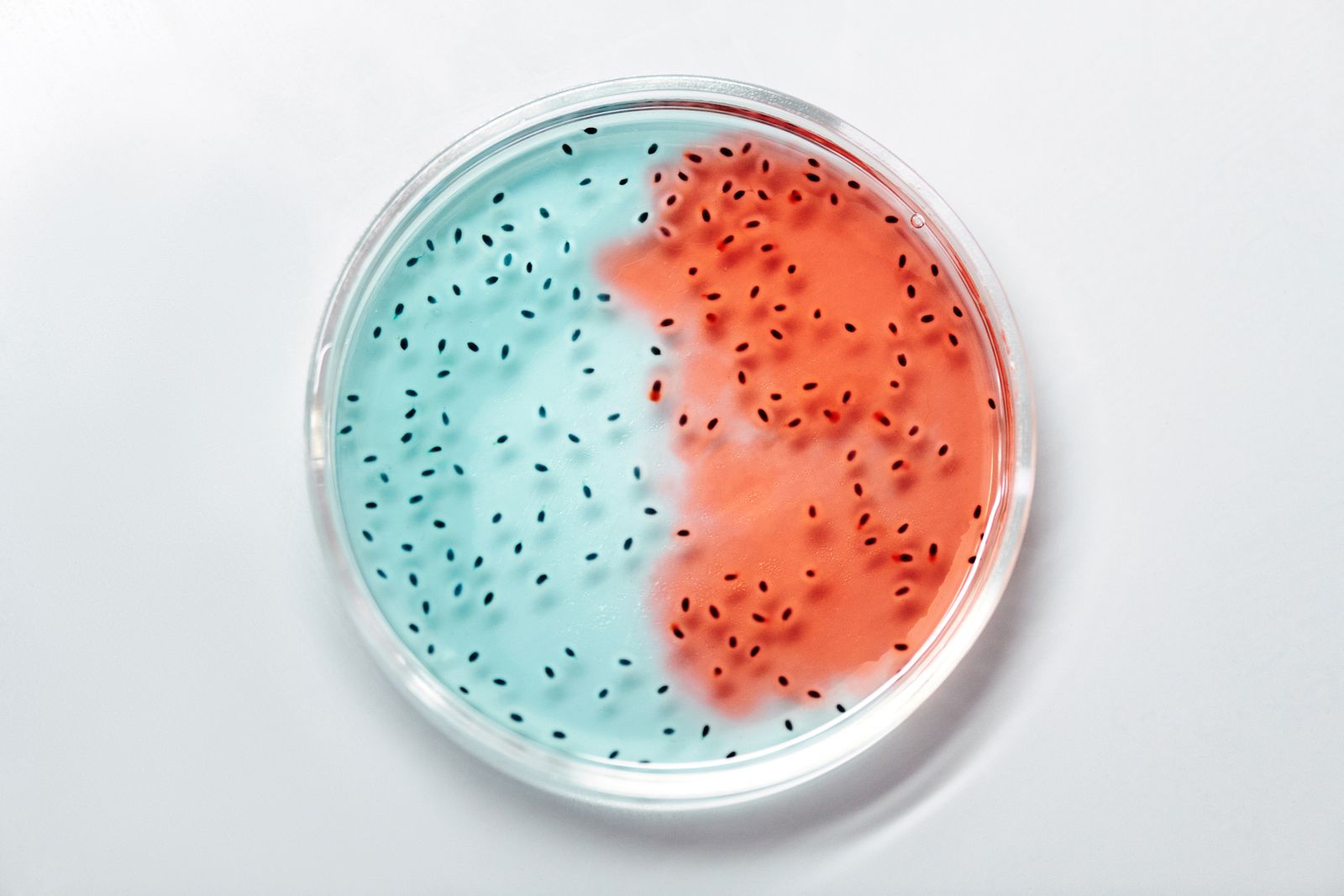
Cosmetic copper peptides versus research grade
This is the distinction that resolves most of the confusion, and it is rarely drawn clearly.
A cosmetic copper peptide serum is a regulated cosmetic product, formulated for topical use at low concentration, marketed for appearance. It is manufactured to cosmetic standards and sold through consumer channels.
A research grade copper peptide is a lyophilized powder characterized by purity and identity testing, supplied for laboratory work. It is not formulated for anything, and it is not a stronger version of a serum.
Both can contain the same molecule. Everything else about them differs: concentration, formulation, regulatory framework, testing standard, intended use. The research grade standard explains the term precisely.
The common error runs in both directions. Treating a cosmetic serum as though it carried the research literature’s weight overstates it. Treating a research vial as a concentrated serum misunderstands what it is for entirely.
The skin barrier problem nobody advertises
Any honest discussion of topical copper peptides has to address this, and most skip it.
Skin exists to keep things out, and it is extremely good at that job. The outermost layer is a genuine barrier, and molecule size is one of the main factors determining what crosses it. Peptides are large relative to what passes easily.
GHK-Cu is a tripeptide, which makes it small as peptides go, and that is part of why it is the copper peptide that gets studied rather than a larger candidate. Small for a peptide is still substantial compared to the molecules that cross skin readily.
This is the central technical difficulty in the whole topical peptide field, and it is the reason formulation science exists as a discipline. A compound that cannot reach the cells carrying its receptors produces no signal regardless of how well characterized the mechanism is.
Marketing that names an impressive mechanism without addressing delivery has skipped the hardest part of the problem, which is what formulation actually has to solve.
Copper peptides and the color question
A practical point that comes up constantly and has a straightforward answer.
GHK-Cu solutions are blue. The color comes from the copper complex and is a normal property of the compound rather than a defect, a contaminant, or a sign of quality.
What color cannot tell you is purity, identity or concentration. A blue solution is a solution containing a copper complex. It is not evidence that the sequence is correct or that the material is what the label claims.
This trips people up because color feels like information. It is the same trap as clarity in bacteriostatic water, as it is with bacteriostatic water: a visible property that correlates with nothing you actually need to know.
Copper peptide concentration and why the figures differ so widely
One of the more confusing things about this compound is that the concentrations quoted in different contexts vary by orders of magnitude, and the reason is worth understanding.
Cosmetic formulations contain copper peptides at low percentages, because they are leave-on products applied to skin over long periods and formulated within cosmetic regulatory constraints. The figures are small by design.
Research material is supplied as a dry mass in a vial, typically 50mg or 100mg for GHK-Cu, and its concentration only exists once a solvent is added. The same vial can be reconstituted to many different concentrations depending on the volume used, which a peptide calculator makes obvious.
These are not comparable numbers. A percentage in a formulated cream and a milligram-per-millilitre figure in a reconstituted vial describe different things about different products. Placing them side by side to argue that one is stronger is comparing a recipe to an ingredient.
The related error is assuming that a higher research concentration is a better version of a cosmetic product. It is not a version of it at all.
Why copper peptides get studied more than most peptides
GHK-Cu has an unusually deep literature for a compound in this catalog, and there are specific reasons for that which are worth knowing.
It was identified early. GHK was isolated from human plasma decades ago, which gave the research a long head start over compounds discovered more recently.
It has an endogenous origin. A molecule the body already produces raises an obvious research question when its concentration is observed to decline with age, and that question sustained interest across many research groups.
It is small and synthesizable. A tripeptide is inexpensive to make and easy to work with, which lowers the barrier to studying it. Compounds that are difficult to synthesize get studied less regardless of how interesting they are.
And it was never a commercial pharmaceutical program, which meant no single sponsor controlled the research agenda. The published research accumulated across many independent groups rather than through a coordinated development effort.
That last factor cuts both ways. Breadth of independent interest is genuinely meaningful. It also means the work was never assembled into the kind of coordinated clinical program that produces definitive human outcome data, which is precisely why the evidence looks the way it does: wide, long-running, and mechanistically detailed without ever converging on controlled human trials. Longevity peptide research goes through other compounds with the same shape.
How to verify copper peptides before sourcing
The verification standard is the same as for any research compound, with one addition specific to this molecule.
The baseline is a batch-specific certificate of analysis from a named independent laboratory, stating purity by HPLC and confirming identity by mass spectrometry, with a lot number matching the vial. A certificate of analysis lays out each field.
The copper-specific addition is that the complex, not just the peptide, is what should be characterized. GHK and GHK-Cu are different entities, and documentation that only addresses the tripeptide has left out the part that makes it a copper peptide.
Healio publishes every batch document before purchase, and GHK-Cu is stocked in both 50mg and 100mg presentations. Documentation practices vary sharply elsewhere.
Where copper peptides sit alongside the other skin compounds
Worth placing in context, since GHK-Cu rarely gets discussed in isolation.
| Compound | Research focus | Evidence depth |
|---|---|---|
| GHK-Cu | Tissue remodeling, wound repair, skin structure | Decades of mechanistic work, limited controlled human outcomes |
| GLOW 70 | Blended formulation including GHK-Cu | Component-level research only, no blend-level trials |
| KLOW 80 | Blended formulation including GHK-Cu and KPV | Component-level research only, no blend-level trials |
The blend row is worth reading carefully. A blend inherits the evidence of its components and gains none of its own from being combined, which is the whole limit of combining compounds.
Copper peptides: frequently asked questions
What are copper peptides?
Peptides that bind copper ions, almost always meaning GHK-Cu specifically: a tripeptide of glycine, histidine and lysine complexed with copper. The copper is part of the studied entity rather than an additive.
What do copper peptides do?
The research describes GHK-Cu as a signaling molecule involved in tissue remodeling, with roles in extracellular matrix processes, gene expression and copper transport. Most of that work is at the cell and tissue model level rather than controlled human outcomes.
Are copper peptides in skincare the same as research grade?
The molecule can be identical, but the products are not. Cosmetic serums are regulated cosmetics formulated for topical use at low concentration. Research grade material is a lyophilized powder for laboratory work.
Why are copper peptide solutions blue?
The blue color comes from the copper complex and is a normal property of the compound. It is not an indicator of purity, identity or concentration, and it tells you nothing about whether the material matches its label.
Do copper peptides penetrate the skin?
Skin is an effective barrier and molecule size works against peptides crossing it. GHK-Cu is small as peptides go, which is part of why it is the one studied, but delivery remains the central technical difficulty in topical peptide research.
What should a copper peptide COA show?
Batch-specific testing from a named independent laboratory, purity by HPLC, identity by mass spectrometry, and a lot number matching the vial. It should characterize the copper complex, not only the tripeptide.
Well studied, and studied for something specific
GHK-Cu genuinely is one of the better characterized compounds in this catalog, and the research it carries is about tissue remodeling mechanisms rather than the outcomes it gets marketed for. Holding both facts at once is the accurate reading. The skin and beauty collection holds the copper peptide compounds, and every batch carries independent testing published before purchase.
Related reading
- GHK-Cu Peptide Benefits, the compound-level research in detail.
- Copper Peptides for Skin, the skin research specifically.
- Best Peptides for Skin, where GHK-Cu sits among the alternatives.
- Peptides for Hair Growth, the follicle research and its limits.