
Pinealon and Semax are both brain-focused peptides from the Russian research tradition, and the size difference between them is the first clue that they are different kinds of compound. Pinealon is three amino acids, Glu-Asp-Arg. Semax is seven, an analog of a fragment of ACTH. Pinealon’s papers ask how a tiny peptide protects neurons from oxidative stress and hypoxia. Semax’s papers ask how a peptide changes the neurotrophin system. This Pinealon vs Semax comparison covers what each is, what the studies found, where they actually touch, and what a lab report should show. Everything below describes laboratory research.
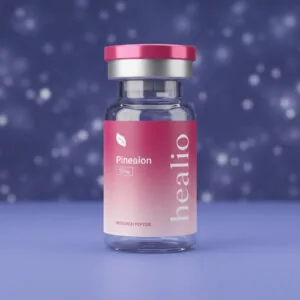 Pinealon
 vs Semax: what is the difference?
Pinealon is studied for cell protection: lower reactive oxygen species, less necrotic cell death and better resistance to hypoxia in neurons. Semax is studied for signaling: higher BDNF and TrkB activity, activated neurotrophin genes after ischemia, and recovery measures after injury. One is described as a protector of cells under stress and the other as a modulator of a growth factor system. They overlap on the word neuroprotection, which is why they show up together, and they differ on how each is said to get there.
Pinealon vs Semax side by side
The table holds the facts that rarely change. Pinealon’s size, price and batch data are pulled live from the product and certificate pages, and the Semax cells say what to ask a seller. Searched as Semax vs Pinealon, the table is the same.
| Pinealon | Semax | |
|---|---|---|
| What it is | Tripeptide, Glu-Asp-Arg | Heptapeptide analog of ACTH(4-10) |
| Main mechanism studied | Reduced reactive oxygen species, antioxidant enzymes | BDNF and TrkB expression, neurotrophin genes |
| Main models | Cultured neurons and rat models | Rat brain models, plus a stroke patient study |
| Evidence type | Cell and rodent work from a small group | Rodent work, an fMRI study and a clinical report |
| Size and price | 10mg vial, $49.99 | Varies by seller |
| Latest batch purity (HPLC) | 99.2% | Ask the seller for the batch report |
| Certificate | Pinealon COA | Ask the seller for the certificate |
What Pinealon is and what its research covers
Khavinson and colleagues in Rejuvenation Research reported that pinealon restricted the accumulation of reactive oxygen species in cerebellar granule cells, neutrophils and PC12 cells under oxidative stress, decreased necrotic cell death, and modified the cell cycle, which the authors read as an interaction with the cell genome. Arutjunyan and colleagues in the International Journal of Clinical and Experimental Medicine found that pinealon given to pregnant rats loaded with methionine improved their offspring’s spatial learning and reduced oxidative stress in cerebellar neurons. Kozina and colleagues compared four short peptides in hypobaric hypoxia and found pinealon had the most pronounced antihypoxic effect. The Pinealon peptide benefits page goes through the rest.
What Semax is and what its research covers
Dolotov and colleagues in Brain Research showed that a single application increased BDNF protein 1.4-fold and TrkB phosphorylation 1.6-fold in the rat hippocampus. Dmitrieva and colleagues reported that Semax and its Pro-Gly-Pro fragment activated neurotrophin and receptor gene transcription after cerebral ischemia. In humans, a study of 110 patients after ischemic stroke reported higher plasma BDNF and better Barthel index scores in those given Semax, and an fMRI study of 52 healthy participants found it changed resting-state connectivity around the right amygdala. The Semax peptide benefits page covers the compound in plain language.
Where Pinealon and Semax overlap in neuroprotection
Both appear in hypoxia and ischemia models, and both have a sub-literature built on rats. That is the real overlap, and it is shallow. Pinealon’s work measures oxidative stress markers and cell survival in cultured neurons. Semax’s work measures growth factor expression and functional recovery. A model of ischemic injury has both an oxidative component and a signaling component, so a researcher could want a compound for each, and nobody has published a head-to-head of the two. Any statement that one beats the other has nothing underneath it. The Selank vs Semax page covers the other brain-peptide pairing.
What hypoxia and ischemia models actually test
Both peptides turn up in oxygen-deprivation experiments, and the models differ in ways that matter for reading the results. Kozina’s hypobaric hypoxia model lowers the oxygen available to the whole animal and measures how well neurons cope, which is where pinealon performed best among four peptides. Dmitrieva’s cerebral ischemia work blocks blood flow to part of the brain and measures gene transcription afterward, where Semax and its Pro-Gly-Pro fragment activated neurotrophin genes. A 2013 paper in the Journal of Molecular Neuroscience looked at the expression of VEGF family genes under Semax in experimental focal ischemia. So one literature measures how cells survive stress, and the other measures which genes switch on. They look at the same kind of insult from opposite ends, and that is the strongest honest sense in which the two are complementary.
Reading claims that Pinealon and Semax work together
Pages that pair the two usually say one protects the neuron and the other helps it grow back. It is a tidy story, and it is a story. The cell-protection evidence and the growth-factor evidence come from different laboratories and different models, and no paper cited here gives both compounds in the same experiment. When a page says they work together, ask which study measured the combination. If the honest answer is that none did, the claim describes a hypothesis worth testing, which is a perfectly good thing for a research design to start from.
Three amino acids against seven: why the size matters
A tripeptide and a heptapeptide are different problems for a laboratory. A three amino acid peptide is simple to make and hard to tell from its own fragments by eye, so the identity line on a certificate matters. A seven amino acid peptide has more room for synthesis errors and for modified variants, so the question is which variant the vial holds. The size also shapes how researchers describe mechanism. Pinealon’s authors suggest a direct interaction with the genome, and Semax’s papers trace a defined receptor and growth factor pathway. Both claims are from the original groups, and independent replication is limited.
When Pinealon, when Semax, and when both
A question about oxidative stress or hypoxia resistance in neurons maps onto Pinealon. A question about BDNF signaling or neurotrophin gene activation maps onto Semax. A design that wants both mechanisms in one ischemia model could use the two vials as separate arms with a combined arm, so any effect can be traced. No paper cited here tests them together.
Pinealon vs Semax in women’s research
The abstracts cited don’t report results by sex. The Pinealon offspring study dosed pregnant rats and measured their young, which is about prenatal exposure and not about sex differences. A woman framing her own question will want sex-stratified results, and for both peptides they are scarce. The Pinealon for sleep page covers that setting.
What the Pinealon and Semax studies can’t tell you
Much of the Pinealon literature comes from one research group, and the abstracts describe cell cultures and rats. The Semax stroke study is a Russian-language clinical report whose abstract doesn’t describe blinding. The fMRI study was acute and in healthy volunteers. Rat hypoxia models aren’t human neurological conditions, and a result in a cultured cell line doesn’t predict a result in a person. Replication outside the originating laboratories is the main thing missing from both.
Pinealon COA: what a lab report shows, and what to ask for on Semax
Every Healio Peptides batch is tested by an independent US laboratory before release, and the report is published before you order. This is the current Pinealon batch.
| Pinealon | |
|---|---|
| Batch | HEALIO-PINL-2615 |
| Purity (HPLC) | 99.2% |
| Identity (ESI-MS) | Confirmed, conforms to the reference standard |
| Endotoxins (LAL) | Under 0.5 EU/mg (limit 5 EU/mg) |
The same four lines are what to ask for from any seller of Semax, plus which variant of Semax the identity result confirms. Match the batch and lot numbers to the vial. Reading a peptide certificate of analysis explains each row.
Pinealon price and format
Healio Peptides lists Pinealon as a 10mg vial, lyophilized powder, at $49.99, which is $5.00 per mg. Semax strengths and prices vary by seller, so compare cost per milligram. Reconstitution uses bacteriostatic water for sale, and the Pinealon calculator turns vial strength and water volume into a concentration. How to reconstitute peptides covers the handling.
Where to buy Pinealon for research
Whichever supplier you use, look for a published certificate before anything else. Every Healio Peptides Pinealon batch ships with a third-party report, and orders go out from the United States. The Pinealon for sale page carries the certificate before you order, and the anti-aging peptides category shows the neighboring compounds.
Pinealon vs Semax: frequently asked questions
Is Pinealon or Semax better?
Neither wins on the evidence. Pinealon is studied for protection of neurons from oxidative stress and hypoxia, and Semax for BDNF signaling and recovery after injury. No paper tests the two against each other.
What is the difference between Pinealon and Semax?
Pinealon is a three amino acid peptide, Glu-Asp-Arg. Semax is a seven amino acid analog of ACTH(4-10). They overlap on neuroprotection and differ on the mechanism each paper describes.
Can Pinealon and Semax be studied together?
Researchers pair them because the mechanisms look complementary, but direct testing of the combination is missing from the papers cited here. Separate vials let each arm be set on its own.
Which has more human data, Pinealon or Semax?
Semax. The sources cited include an fMRI study in 52 healthy participants and a stroke study in 110 patients, while the Pinealon papers here are cell and rodent work.
Are Pinealon and Semax FDA approved?
Nothing on this page is a statement about any product’s legal status or medical advice. Healio Peptides sells Pinealon strictly for laboratory research, and the studies described here are published research, not guidance.
Do Pinealon and Semax reviews tell me anything useful?
Reviews mix different products, forms and expectations, so they say little about any one vial. A batch certificate says more: it ties a purity and identity result to a lot number you can check.
More on Pinealon, Semax and brain peptides
- Selank vs Semax, the anxiolytic label against the nootropic label.
- Epitalon vs Pinealon, two short peptides from the same tradition.
- Nootropic peptides, what the category covers and what it can’t claim.
Healio Peptides supplies research compounds for laboratory use only. They are not for human or veterinary use, have not been evaluated by the FDA, and nothing on this page is medical advice.