
LL-37 and BPC-157 both show up in wound healing research, and that is where the resemblance stops. LL-37 is a 37 amino acid peptide that the human body already makes, the only cathelicidin antimicrobial peptide in people, and most of its literature is about host defense. BPC-157 is a 15 amino acid peptide from a protein in gastric juice, studied for blood vessel formation and tissue repair. One belongs to the immune system’s toolkit. The other is a repair-model compound. This LL-37 vs BPC-157 comparison covers what each is, what the research behind them covers, where they overlap in wound models, and what to ask of a lab report. Everything below describes laboratory research. The BPC-157 side below carries live data from the product and certificate pages, and the other side is written from the published literature.
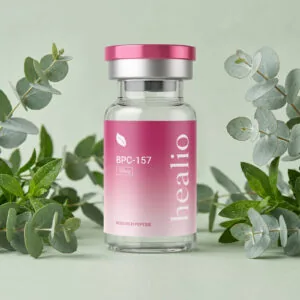 BPC-157
Why LL-37 draws attention in wound research
Wounds are where defense and repair collide. A broken skin surface is an entry point for microbes, and LL-37 is part of the first response: it disrupts bacteria and also signals to skin and immune cells that repair should begin. That dual role makes it attractive in wound models and complicated in interpretation, since an effect on healing could come from fewer microbes, from direct signaling, or from both. BPC-157 research has no antimicrobial layer to untangle, which makes its wound results simpler to read and its scope narrower.
LL-37 vs BPC-157: what is the difference?
LL-37 is an antimicrobial peptide. It kills or disrupts microbes, and it also signals to immune cells and skin cells, which is how it ends up in wound studies. BPC-157 has no antimicrobial role in the literature. It is studied for angiogenesis and growth factor signaling in tendon, ligament, muscle and gut models. When a wound healing page lists both, it’s describing two routes into the same outcome: LL-37 through infection defense and immune signaling, BPC-157 through blood supply and growth signals. Different mechanisms, with a shared interest in closing a wound.
LL-37 vs BPC-157 side by side
The table holds the facts that rarely change, with BPC-157’s live data from the product and certificate pages. Searching ll 37 vs bpc 157 or bpc 157 vs ll 37 gives the same two columns.
| BPC-157 | LL-37 | |
|---|---|---|
| What it is | 15 amino acids, derived from a protein in human gastric juice | 37 amino acids, the human cathelicidin antimicrobial peptide |
| Main role studied | Blood vessel formation, growth factor signaling, repair | Host defense, immune signaling, wound re-epithelialization |
| Typical research models | Tendon, ligament, muscle and gut lining models in animals | Infection, inflammation, autoimmune and wound models, including a human ulcer trial |
| Evidence type | Almost all preclinical | Preclinical plus a randomized human wound trial |
| Size and price | 10mg vial, $59.99 | Varies by seller |
| Latest batch purity (HPLC) | 99.5% | Ask the seller for the batch report |
| Certificate | BPC-157 COA | Ask the seller for the certificate |
What BPC-157 is and what its research covers
BPC-157 stands for Body Protection Compound 157. The most useful single source is a 2025 systematic review in HSS Journal by Vasireddi and colleagues, who kept 36 studies out of 544 articles. Thirty-five were preclinical and one was a small retrospective clinical report. The animal findings are consistent: activity in angiogenesis and growth pathways, and lower inflammatory cytokines. What BPC-157 does in research explains the mechanism in plain language.
What LL-37 is and what its research covers
LL-37 has a broad literature. Vandamme and colleagues in Cellular Immunology wrote a comprehensive summary of it, calling LL-37 a factotum, a peptide that does many jobs. Kahlenberg and Kaplan in the Journal of Immunology reviewed its role in inflammation and autoimmune disease. Wound healing is where it meets BPC-157’s territory, and there is a randomized, placebo-controlled trial: Grönberg and colleagues in Wound Repair and Regeneration tested LL-37 in hard-to-heal venous leg ulcers. That’s a real human trial in one specific wound type. It doesn’t generalize to a tendon, a gut lining or a research vial.
Where LL-37 and BPC-157 overlap in wound research
The overlap is wound repair, and it’s narrower than the listicles suggest. A skin wound needs to stay free of infection, close its surface, and build new vessels. LL-37 research touches the first two, and BPC-157 research touches the third. That makes the pair complementary on paper, and a paper design isn’t a result. No study cited here tests the two together. A comparison that calls one “superior” has to pick an outcome, and the outcomes differ: re-epithelialization for LL-37, angiogenesis and tendon or gut repair for BPC-157.
Two directions on inflammation
The two compounds also point in different directions on inflammation, which tends to get lost. In the animal work, BPC-157 is reported with lower inflammatory cytokines. LL-37 is a signaling molecule that can promote the inflammatory response as part of initiating wound repair, and the Kahlenberg review places it in autoimmune disease research as well as defense. So “anti-inflammatory” doesn’t describe both, and a study that treats them as interchangeable inflammation-modulating peptides is starting from a misreading. This is one reason a page that stacks them for a single purpose should be read with caution.
What a wound model can and can’t show
A wound model measures closure rate, tissue structure and sometimes bacterial load. It can show that a compound changed how quickly a standard injury healed in a given animal. It can’t show that the same compound would do so in a person, in a chronic wound with different biology, or in a tissue like tendon. The LL-37 ulcer trial is the exception that proves the limit: it’s human, and it concerns one chronic wound type. Both compounds’ wound results should be read inside their own models.
Evidence tiers: a wound trial against an animal record
LL-37 has a randomized human wound trial and BPC-157 has one small retrospective report, so on the narrow measure of human wound data LL-37 is ahead. The trial concerns one ulcer type under controlled conditions, and BPC-157’s thicker record is in animal tendon and gut models. They sit at different stages of different questions, so a ranking would hide more than it shows.
When BPC-157 alone, and when LL-37
A study of angiogenesis and structural repair in tendon, ligament or gut models maps onto BPC-157. A study of host defense, microbial load or immune signaling in a wound maps onto LL-37. A design that asks about both, such as an infected wound model, would need controls for each and careful reading of inflammatory markers, since the two compounds don’t move inflammation in the same direction. Related listings for repair work include GHK-Cu and TB-500, both studied in wound and tissue models.
What the LL-37 and BPC-157 studies can’t tell you
An antimicrobial peptide in a cell culture, a rodent tendon injury and a human leg ulcer measure unrelated outcomes. Most of the repair work on BPC-157 used male animals, which leaves a gap for a woman framing her own research question, and the BPC-157 research gap in women covers it. Check each paper’s methods for who or what was studied, because many studies of this kind don’t report results by sex.
BPC-157 COA: what a lab report shows, and what to ask for on LL-37
Every Healio Peptides batch is tested by an independent US laboratory before release, and the report is published before you order. This is the current BPC-157 batch.
| BPC-157 | |
|---|---|
| Batch | HEALIO-BPC157-2605 |
| Purity (HPLC) | 99.5% |
| Identity (ESI-MS) | Confirmed, conforms to the reference standard (1419.56) |
| Endotoxins (LAL) | Under 0.5 EU/mg (limit 5 EU/mg) |
The same four lines are what to ask for from any seller of LL-37: purity by HPLC, identity by mass spectrometry, an endotoxin result and a lot number that matches the vial. Endotoxin matters more than usual here, because LL-37 binds bacterial endotoxin and a contaminated preparation would confound an immune study. A 37 amino acid peptide is also long enough that identity needs checking. Reading a peptide certificate of analysis walks through each row.
BPC-157 price and format
Healio Peptides lists BPC-157 as a 10mg vial, lyophilized powder, at $59.99. It reconstitutes with bacteriostatic water for sale, added slowly down the vial wall with no shaking, and the BPC-157 calculator turns vial strength and water volume into a concentration. How to reconstitute peptides covers the handling.
Where to buy BPC-157 for research
Whatever you source, look for a published certificate before anything else. Every Healio Peptides BPC-157 batch ships with a third-party report, and orders go out from the United States. The BPC-157 listing carries the certificate before you order, and the peptides for healing category shows the neighboring repair compounds.
LL-37 vs BPC-157: frequently asked questions
Is LL-37 or BPC-157 better for wound healing research?
Neither wins on the evidence. LL-37 is studied for infection defense and re-epithelialization, and BPC-157 for angiogenesis and tissue repair, so the right choice follows from the outcome a study measures.
What is the difference between LL-37 and BPC-157?
LL-37 is a 37 amino acid human antimicrobial peptide with immune signaling roles. BPC-157 is a 15 amino acid peptide from a gastric protein studied for tissue repair.
Why does endotoxin matter for an LL-37 certificate?
LL-37 binds bacterial endotoxin, and a contaminated preparation would confound an immune or wound study. Look for an endotoxin result alongside purity, identity and a lot number that matches the vial.
Can LL-37 and BPC-157 be studied together?
Some pages pair them, but direct testing of the combination is missing from the literature cited here. Each compound’s record is separate.
Are LL-37 and BPC-157 FDA approved?
Neither is approved as a drug for human use, and nothing on this page is medical advice. LL-37 has a human clinical trial in one wound type, and BPC-157 has one small retrospective report. Healio Peptides sells BPC-157 strictly for laboratory research.
Is LL-37 anti-inflammatory like BPC-157?
Not reliably. LL-37 can promote inflammatory signaling as part of wound repair and appears in autoimmune disease research, while BPC-157 is reported with lower inflammatory cytokines in animals.
More on BPC-157 and wound repair
- BPC-157 vs GHK-Cu, repair against skin remodeling.
- BPC-157 for inflammation, where its inflammation data stops.
- BPC-157 vs TB-500, the pairing within repair research.
Healio Peptides supplies research compounds for laboratory use only. They are not for human or veterinary use, have not been evaluated by the FDA, and nothing on this page is medical advice.