
Retatrutide and tirzepatide are the two compounds people most often set side by side now, because each adds receptors to the GLP-1 pathway semaglutide uses. Tirzepatide activates two: GIP and GLP-1. Retatrutide activates three, adding glucagon. The retatrutide vs tirzepatide question is whether the third receptor changes the result, and the honest answer is that two large trials each reported big numbers and nobody has run them against each other in the papers cited here. This page lays out what each trial measured, why the headline figures can’t be subtracted, and what a lab report shows for the research vials. Everything below describes laboratory research and published trials, and nothing here is medical advice.
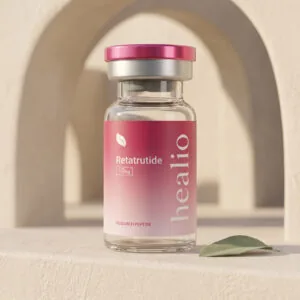 Retatrutide
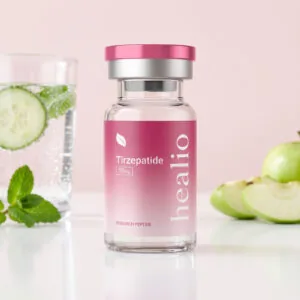 Tirzepatide
Retatrutide vs tirzepatide: what is the difference?
Tirzepatide is a dual agonist of the glucose-dependent insulinotropic polypeptide (GIP) receptor and the GLP-1 receptor. Retatrutide is a triple agonist of GIP, GLP-1 and glucagon receptors. So retatrutide is tirzepatide’s two receptors plus a third. The research difference is the third: glucagon receptor activity is a separate lever from the incretin pair, and it is the reason retatrutide is in trials at all. Whether it is a better lever, or only a different one, is the question the existing data can’t settle.
Retatrutide vs tirzepatide side by side
The table holds the published facts, plus size, price and batch data pulled live from the product and certificate pages. The trials had different designs, so read the rows as separate records.
| Retatrutide | Tirzepatide | |
|---|---|---|
| Receptors | GIP, GLP-1 and glucagon | GIP and GLP-1 |
| Largest obesity trial cited | TRIUMPH-1, 2,339 adults, 80 weeks | SURMOUNT-1, 2,539 adults, 72 weeks |
| Result at the top arm | -25.0% body weight against -3.9% placebo | -20.9% body weight against -3.1% placebo |
| Reaching 20% loss or more | Not stated in the abstract cited | 57% in the top arm, 3% on placebo |
| Size and price | 10mg and 20mg and 30mg vials, from $78.99 | 10mg and 15mg and 30mg vials, from $54.99 |
| Latest batch purity (HPLC) | 99.3% | 99.4% |
| Certificate | Retatrutide COA | Tirzepatide COA |
What the tirzepatide trial measured
Jastreboff and colleagues’ SURMOUNT-1 trial in the New England Journal of Medicine randomized 2,539 adults with obesity or overweight with a complication, excluding diabetes, to tirzepatide or placebo for 72 weeks. Mean weight change was -20.9% in the top arm against -3.1% on placebo, and 57 percent of that arm lost 20 percent or more against 3 percent on placebo. Gastrointestinal events were the most common adverse events, and treatment was discontinued for adverse events in 4.3 to 7.1 percent across tirzepatide arms and 2.6 percent on placebo. Its later head-to-head with semaglutide is on the semaglutide vs tirzepatide page.
What the retatrutide trials measured
The dose-ranging study is Jastreboff and colleagues’ phase 2 trial: 338 adults over 48 weeks, with -24.2% in the top arm against -2.1% on placebo, gastrointestinal events as the most common problem, and heart rate increases that were dose-dependent and peaked at 24 weeks. The phase 3 result is the TRIUMPH-1 trial: 2,339 adults with obesity and no diabetes over 80 weeks, with -25.0% in the top arm against -3.9% on placebo, and reduced knee pain and sleep apnea events in the subgroups that had those conditions. In type 2 diabetes, a phase 3 trial in The Lancet reported HbA1c falling 1.94% at the top arm against 0.81% on placebo over 40 weeks. The retatrutide benefits page covers the research in plain language.
Why the retatrutide and tirzepatide headline numbers don’t compare
It is tempting to set -25.0% beside -20.9% and say retatrutide wins by four points. The two figures come from trials 80 and 72 weeks long, with different eligibility, different sponsors’ protocols and different dose-escalation schedules, and the phase 2 figure of -24.2% came from a different design altogether. Weight change in these trials depends on how long the trial runs, who is enrolled and how intercurrent events are handled. The direction is plausible, and a four-point gap across two trials isn’t a measured difference between the drugs. The one head-to-head that does exist in this class, tirzepatide against semaglutide, shows what it takes: one randomized comparison with both arms at the same time.
What a head-to-head would need to show
For retatrutide against tirzepatide, a credible comparison needs matched populations, the same duration, maximum tolerated doses in both arms, and the same weight endpoint. The SURMOUNT-5 design, an open-label trial of tirzepatide against semaglutide over 72 weeks in 751 adults, is the template. It found -20.2% against -13.7%. No such paper for retatrutide against tirzepatide appears in the sources cited here, and until one does, ranking them is an inference.
What else the retatrutide trials measured
Beyond weight, the retatrutide program has branched into conditions where weight is only part of the picture. TRIUMPH-1 included prespecified subgroups with knee osteoarthritis and obstructive sleep apnea, reporting lower WOMAC pain scores and fewer apnea-hypopnea events than placebo. A phase 2 trial in Nature Medicine looked at retatrutide in metabolic dysfunction-associated steatotic liver disease, and a substudy in The Lancet Diabetes and Endocrinology examined body composition in people with type 2 diabetes. Tirzepatide’s obesity trials had a similar breadth, including a later paper on obesity treatment and diabetes prevention. Both programs are wider than a single weight figure.
Reading headlines about retatrutide vs tirzepatide
Headlines quote the biggest number from each side and set them next to each other. A fair reading asks four things of each figure: which trial, how long, which dose arm, and which population. Quoting -25.0% beside -20.9% answers none of them, and the two trials ran 80 and 72 weeks with different protocols. The abstracts cited on this page report those details, which makes them a better source than a summary. When a page leaves them out, the comparison usually looks cleaner than it is.
Side effects reported in the retatrutide and tirzepatide trials
For both compounds the most common adverse events were gastrointestinal, mostly mild to moderate and concentrated during dose escalation. The retatrutide phase 2 paper adds dose-dependent heart rate increases that peaked at 24 weeks and declined afterward, and reports that a lower starting dose partly reduced the gastrointestinal events. These are trial observations in supervised settings, and nothing here applies to research-grade vials. The retatrutide side effects page goes through what the trials reported.
Retatrutide vs tirzepatide in women’s research
The retatrutide phase 2 obesity trial enrolled 51.8 percent men, so close to half of participants were women, and 55 percent of the type 2 diabetes phase 3 trial were female. The abstracts for the large obesity trials don’t give sex-stratified outcomes, so a woman framing her own question will want those breakdowns from the full papers. The peptides for weight loss in women guide covers that setting, and tirzepatide for women goes through the older compound.
What the retatrutide and tirzepatide studies can’t tell you
Trials of the pharmaceutical products can’t be transferred to research-grade vials. Participants followed specific titration schedules under clinical supervision, and the trials were industry funded, as is usual. Neither paper tests the compounds against each other. Regulatory status is the regulator’s to state, and this page makes no statement about it for either compound. Treat everything here as a statement about published papers.
Retatrutide and tirzepatide COA: what the lab reports show
Every Healio Peptides batch is tested by an independent US laboratory before release, and the report is published before you order. These are the current two.
| Retatrutide | Tirzepatide | |
|---|---|---|
| Batch | HEALIO-RETA-2602 | HEALIO-TIRZ-2604 |
| Purity (HPLC) | 99.3% | 99.4% |
| Identity (ESI-MS) | Confirmed, conforms to the reference standard (4731.33) | Confirmed, conforms to the reference standard (4813.45) |
| Endotoxins (LAL) | Under 0.5 EU/mg (limit 5 EU/mg) | Under 0.5 EU/mg (limit 5 EU/mg) |
Both are long peptides, so identity is the row to read closely. Purity says how clean the powder is, and identity says it holds the molecule on the label. Match the batch and lot numbers to the vial. Reading a peptide certificate of analysis explains every row.
Retatrutide vs tirzepatide price and format
Healio Peptides lists retatrutide in 10mg and 20mg and 30mg vials and tirzepatide in 10mg and 15mg and 30mg vials, both lyophilized powder. Strength differs between vials, so compare cost per milligram: retatrutide’s lowest listing is $7.90 per mg and tirzepatide’s is $5.50 per mg. Both reconstitute with bacteriostatic water for sale, and the retatrutide calculator and tirzepatide calculator turn vial strength and water volume into a concentration. How to reconstitute peptides covers the handling.
Where to buy retatrutide and tirzepatide for research
Whichever supplier you use, look for a published certificate before anything else. Every Healio Peptides batch ships with a third-party report, and orders go out from the United States. Start with the retatrutide for sale and tirzepatide for sale pages, both of which carry the certificate before you order. The peptides for weight loss category shows the rest of the range.
Retatrutide vs tirzepatide: frequently asked questions
Is retatrutide better than tirzepatide?
The trials point to larger average weight loss with retatrutide, -25.0% at 80 weeks against -20.9% at 72 weeks. They are separate trials and no head-to-head is in the papers cited here, so it isn’t a like-for-like result.
What is the difference between retatrutide and tirzepatide?
Tirzepatide activates GIP and GLP-1 receptors. Retatrutide activates those two plus the glucagon receptor.
How does retatrutide work?
It is an agonist of three receptors: GIP, GLP-1 and glucagon. The trials report weight change alongside gastrointestinal events and, in phase 2, dose-related heart rate increases.
Why can’t -25.0% and -20.9% be compared directly?
They come from different trials with different durations, populations and protocols. A fair comparison needs both compounds in the same randomized trial.
Is retatrutide approved?
Regulatory status is the regulator’s to state, and this page cites published trials only. Healio Peptides sells both compounds strictly for laboratory research, and nothing on this page is medical advice.
Do retatrutide and tirzepatide reviews tell me anything useful?
Reviews mix different products, sources and expectations, so they say little about any one vial. A batch certificate says more: it ties a purity and identity result to a lot number you can check.
More on retatrutide and tirzepatide
- Retatrutide vs semaglutide, the triple agonist against the selective GLP-1 agonist.
- Semaglutide vs tirzepatide, the one pair with a head-to-head trial.
- What is retatrutide, the compound in plain language.
Healio Peptides supplies research compounds for laboratory use only. They are not for human or veterinary use, have not been evaluated by the FDA, and nothing on this page is medical advice.