
BPC-157 and KPV keep turning up in the same conversations about gut lining and inflammation, usually as a pair, and the pairing hides how little the two have in common. BPC-157 is a 15 amino acid peptide derived from a protein in gastric juice. KPV is three amino acids long, the tail end of a hormone called alpha-MSH. One is studied as a repair compound, the other as an inflammatory signaling compound. This BPC-157 vs KPV comparison covers what each is, what the studies behind them cover, where they overlap, and what a batch lab report shows. Everything below describes laboratory research. If you’re sourcing for a study on gut or tissue models, the listings are linked as we go, and the peptides for gut health guide gives the wider context.
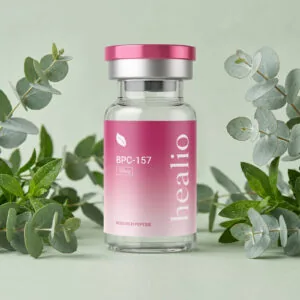 BPC-157
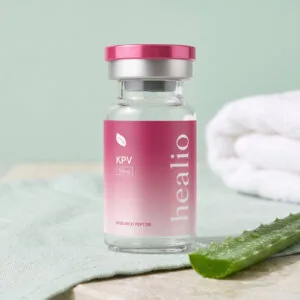 KPV
BPC-157 vs KPV: what is the difference?
BPC-157 is studied for repair: blood vessel formation, growth factor signaling, and healing in tendon, ligament, muscle and gut lining models. KPV is studied for inflammation: how a short peptide gets into intestinal cells and quiets inflammatory signaling in mouse models of bowel disease and skin irritation. Both sit almost entirely in animal and cell research, and neither is approved as a drug. The practical difference is the question each one answers. BPC-157 asks what helps tissue rebuild. KPV asks what turns the inflammatory signal down.
BPC-157 vs KPV side by side
Search it as BPC-157 vs KPV or KPV vs BPC-157 and the table is the same. It holds the facts that rarely change, plus size, price and batch data pulled live from the product and certificate pages.
| BPC-157 | KPV | |
|---|---|---|
| Origin | 15 amino acids, derived from a protein in human gastric juice | Three amino acids (lysine, proline, valine), the tail of alpha-MSH |
| Main mechanism studied | Blood vessel formation, growth factor signaling | Inflammatory signaling, uptake into intestinal cells |
| Strongest research area | Tendon, ligament, muscle and gut lining models | Intestinal and skin inflammation models |
| Evidence type | Almost all preclinical | Mouse and cell models |
| Size at Healio Peptides | 10mg | 10mg |
| Price per vial | $59.99 | $44.99 |
| Latest batch purity (HPLC) | 99.5% | 99.6% |
| Certificate | BPC-157 COA | KPV COA |
What BPC-157 is and what its research covers
BPC-157 stands for Body Protection Compound 157, and the name tells you what researchers hoped it would do. The best single source is a 2025 systematic review in HSS Journal by Vasireddi and colleagues. They found 544 articles and kept 36. Thirty-five were preclinical and one was a small retrospective clinical report. The reviewers described consistent animal findings: activity in pathways tied to cell growth and angiogenesis, and lower inflammatory cytokines. That last point is where BPC-157 brushes against KPV’s territory, and it’s worth noticing that BPC-157’s anti-inflammatory signal comes as a side effect of repair. For the mechanism in plain language, see what BPC-157 does in research.
What KPV is and what its research covers
KPV is the C-terminal tripeptide of alpha-melanocyte-stimulating hormone, the part that carries much of the parent hormone’s anti-inflammatory behavior without its role in pigmentation. Two papers anchor the research. Dalmasso and colleagues in Gastroenterology showed that KPV enters intestinal cells through the PepT1 transporter and reduced inflammation in mouse colitis. Kannengiesser and colleagues in Inflammatory Bowel Diseases reported anti-inflammatory activity in two murine models of inflammatory bowel disease. Both are rodent studies, and the KPV peptide benefits page goes through the rest of the record, including the skin work.
Where BPC-157 and KPV overlap in gut research
Both compounds show up in intestinal models, which is why people search BPC-157 vs KPV for gut healing at all. The overlap is real but shallow. BPC-157 research looks at lining integrity and repair after injury. KPV research looks at the inflammatory drivers in colitis models. A model of colitis involves both an inflamed gut and a damaged one, so a researcher could reasonably want a compound for each half of the problem. Nobody has published a head-to-head test of the two, so any claim that one beats the other has nothing underneath it. The BPC-157 for inflammation guide covers where BPC-157’s own inflammation data stops.
BPC-157 and KPV together: where KLOW fits
The pair is two listings, BPC-157 for sale and KPV for sale, so a study can set its own ratio. Both also sit inside KLOW 80, which holds 10mg of each alongside 50mg of GHK-Cu and 10mg of TB-500. People who search kpv vs bpc 157 vs tb 500 are often looking at that same set of compounds, and the BPC-157 vs KLOW page explains why a result from the blend can’t be pinned on one ingredient.
How the BPC-157 and KPV gut models differ
The two literatures use different tools. The KPV papers lean on chemically induced colitis in mice. Kannengiesser and colleagues put KPV through both a DSS colitis model and a transfer colitis model, which test the compound against an inflamed gut from two angles, and Dalmasso and colleagues tied its effect to the PepT1 transporter that moves small peptides into intestinal cells. The BPC-157 papers are broader: tendon transection, muscle crush, gut lesions and wound models, with healing speed and tissue structure as the endpoints. So the same word, “gut,” covers an inflammation readout in one literature and a repair readout in the other, and a result from one can’t stand in for the other.
When BPC-157 alone, KPV alone, or both
A question about structural repair, such as lining integrity or tendon healing, maps onto BPC-157. A question about the inflammatory signal that drives damage maps onto KPV. A design that wants both mechanisms in one system could use the two vials together, with a careful version adding single-compound arms so any effect can be traced to its source. Keeping them as two listings makes that possible, since each can be set on its own. A pre-mixed vial of both can’t be unmixed.
BPC-157 vs KPV in women’s research
Gut and skin inflammation are areas where women researchers frequently start, and the animal evidence for both compounds doesn’t answer sex-specific questions on its own. The BPC-157 repair work leaned on male animals, and the KPV papers are too few to say. A woman reading across to her own question will want sex-stratified results, and for both compounds they are scarce. The BPC-157 research gap in women goes through the repair side.
What the BPC-157 and KPV studies can’t tell you
A mouse colitis model is a mouse colitis model. It doesn’t reproduce human bowel disease, and the BPC-157 and KPV papers use different models, schedules and routes, so their results can’t be laid side by side. A lot of the BPC-157 literature comes from a small group of laboratories, which is a reason to want independent replication, and the KPV papers are fewer still. The single clinical BPC-157 study in the HSS review was a small retrospective report, and there is no equivalent for KPV. When you read the papers, check the methods for the sex of the animals used, since many studies of this kind don’t report results by sex.
BPC-157 and KPV COA: what a lab report shows
Every Healio Peptides batch is tested by an independent US laboratory before release, and the report is published before you order. These are the current two.
| BPC-157 | KPV | |
|---|---|---|
| Batch | HEALIO-BPC157-2605 | HEALIO-KPV-2608 |
| Purity (HPLC) | 99.5% | 99.6% |
| Identity (ESI-MS) | Confirmed, conforms to the reference standard (1419.56) | Confirmed, conforms to the reference standard (342.44) |
| Endotoxins (LAL) | Under 0.5 EU/mg (limit 5 EU/mg) | Under 0.5 EU/mg (limit 5 EU/mg) |
Purity says how clean the powder is. Identity says it’s the molecule on the label, which matters for a tripeptide as small as KPV, where a wrong residue is hard to spot by eye. Match the batch and lot numbers to the vial. If certificates are new to you, reading a peptide certificate of analysis explains every row.
BPC-157 vs KPV price and format
Healio Peptides lists BPC-157 as a 10mg vial and KPV as a 10mg vial, both lyophilized powder. At the listed prices BPC-157 comes to $6.00 per mg and KPV to $4.50 per mg, a rough guide at best, since a tripeptide and a 15 amino acid peptide don’t cost the same to make. The two together come to $104.98 as separate vials. Both reconstitute with bacteriostatic water for sale, added slowly down the vial wall without shaking, and the BPC-157 calculator and KPV calculator turn vial strength and water volume into a concentration. How to reconstitute peptides covers the handling.
Where to buy BPC-157 and KPV for research
Whichever BPC-157 and KPV supplier you use, look for a published certificate before anything else. Every Healio Peptides batch ships with a third-party certificate, and orders go out from the United States. For a gut or inflammation model, start with the BPC-157 listing and the KPV listing. Both carry the certificate before you order.
BPC-157 vs KPV: frequently asked questions
Is BPC-157 or KPV better for gut research?
Neither wins on the evidence. BPC-157 is studied for lining repair and KPV for inflammatory signaling, and no paper tests the two against each other. The better fit depends on which half of the problem a model is built to measure.
Can BPC-157 and KPV be studied together?
Researchers pair them because the mechanisms look complementary, but direct testing of the combination is thin. They can be sourced as two vials, or inside KLOW 80, which also holds GHK-Cu and TB-500.
What is the difference between BPC-157 and KPV?
BPC-157 is a 15 amino acid peptide from a gastric protein, studied for repair. KPV is a three amino acid fragment of alpha-MSH, studied for inflammatory signaling.
Are BPC-157 and KPV FDA approved, and is there human safety data?
Neither is approved as a drug for human use. Human safety data is thin for both: the 2025 HSS review found one small clinical study of BPC-157, and the KPV papers cited here are rodent studies. Healio Peptides sells both for laboratory research only, and nothing on this page is medical advice.
Do BPC-157 and KPV reviews tell me anything useful?
BPC-157 and KPV reviews mix different products, sources and expectations, so they say little about any one vial. A batch certificate says more: it ties a purity and identity result to a lot number you can check.
How do BPC-157 and KPV compare with TB-500?
TB-500 is studied for cell migration rather than repair signaling or inflammation, and it has its own comparison with BPC-157. See BPC-157 vs TB-500 for that side by side.
More on BPC-157 and KPV
- Peptides for inflammation, what each compound was studied for.
- GLOW vs KLOW, the two blends differ by exactly one compound: KPV.
- BPC-157 vs GHK-Cu, repair against remodeling.
Healio Peptides supplies research compounds for laboratory use only. They are not for human or veterinary use, have not been evaluated by the FDA, and nothing on this page is medical advice.