

Search this topic and one of the first things you find is a sports medicine journal asking, more or less in these words, whether the field actually knows anything more about peptides than it did a decade ago.
That is a strange result for a category with this much marketing behind it, and it is also the most useful starting point available. The gap between what recovery peptide marketing claims and what the literature supports is wide, well documented, and openly discussed by the people who would benefit most from it being narrower.
So this guide works through it honestly: which compounds have real research, what kind of research it is, where it stops, and why the sourcing question turns out to matter more here than the compound question.
Why peptides for recovery are controversial in sports medicine
The controversy is not really about whether the compounds do anything. It is about the shape of the evidence.
Almost all of the influential recovery peptide work is preclinical: cell cultures and animal models, mostly rats. That research is real, it is published, and in several cases the findings are striking. What it is not is a controlled human trial, and the distance between those two categories is where nearly all overclaiming in this space happens.
There is a second complication. Several of these compounds appear on anti-doping prohibited lists, which shapes how sports medicine discusses them and also means competitive athletes face a completely separate set of considerations from a laboratory context.
None of that makes the compounds uninteresting. It means the honest version of this topic contains the phrase “in animal models” a lot, and the marketing version never does.
BPC-157 and TB-500: the most researched recovery pair
These two are studied together often enough that they are effectively a single subject in the literature.
BPC-157, Body Protection Compound 157, is a synthetic fragment derived from a protein found in gastric juice. The research covers tendon and ligament healing, gut lining integrity, and blood vessel formation, which is the mechanism doing much of the work: better vascularisation of a healing site means better delivery of everything a repair needs.
TB-500 is a synthetic fragment of thymosin beta-4, a protein whose active sites have been mapped to cell migration and actin regulation. Where BPC-157 research emphasises blood vessel formation, TB-500 research emphasises getting repair cells to the site and organising the structural proteins once they arrive. The mechanisms, the evidence behind each, and the fact that no study has ever tested the two together are worth reading in full.
The pairing logic is that the two mechanisms are complementary rather than redundant. That reasoning is sound and mostly theoretical, since studies of the combination specifically are far thinner than studies of either alone. Healio supplies them together, alongside GHK-Cu, in the GLOW 70 blend, and with KPV added as well in KLOW 80.
KPV peptide benefits and inflammation
KPV is the one people miss, and it is arguably the most mechanistically interesting compound here.
It is a tripeptide, the final three amino acids of alpha-MSH, and it is studied for anti-inflammatory signalling. Rather than suppressing inflammation broadly the way a general anti-inflammatory does, the research describes it acting on specific inflammatory pathways inside cells.
That distinction matters for recovery specifically. Inflammation is a necessary part of healing, not simply an obstacle to it, so a compound that modulates particular pathways is a different proposition from one that blunts the whole response. Much of the KPV literature comes from gut inflammation research rather than musculoskeletal work, which is worth knowing when you see it marketed for joints.
Peptides for healing tendons and joints
Tendon and ligament research is where the recovery peptide published research is most concentrated, and there is a reason for that.
Tendons heal slowly and badly. They have poor blood supply compared to muscle, which means fewer of the cells and nutrients that repair requires reach the injury. Repaired tendon tissue also tends to be structurally inferior to the original. This is a genuine unsolved clinical problem, which is exactly why compounds that appear to improve vascularisation and collagen organisation attract research attention.
The animal work on tendon healing with BPC-157 is the most cited body of evidence in this entire category. It is also, still, animal work. Rat tendon is not human tendon, healing timelines differ, and the translation record from rodent musculoskeletal studies to human outcomes is mixed at best.
Joint research follows a similar pattern with an inflammation component layered on, which is where KPV enters the picture. The full range sits under peptides for healing.
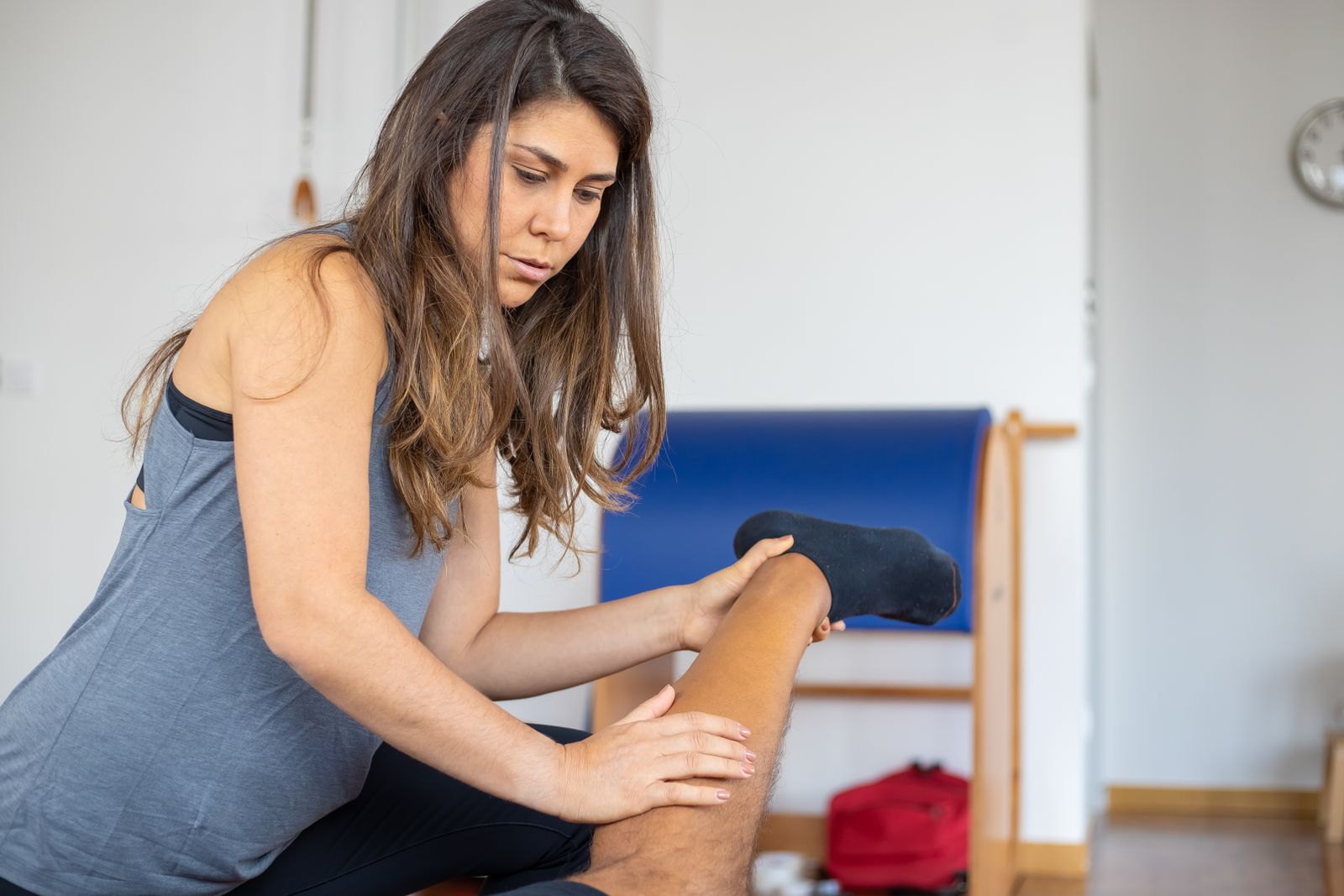
Peptides for inflammation and why it is not the same as recovery
These two words get used interchangeably in product marketing, and they describe different processes.
Inflammation is the opening phase of healing rather than an interruption of it. Damaged tissue triggers an immune response that clears debris and recruits the cells that rebuild. Suppress that response entirely and repair slows down, which is the well-known trade-off behind long-term anti-inflammatory use around soft tissue injuries.
What the research on compounds like KPV describes is narrower than suppression. The interesting question is whether specific inflammatory pathways can be modulated while leaving the useful part of the response intact. That is a meaningfully different proposition from turning the whole system down, and it is why inflammatory signalling research keeps appearing next to tissue repair research.
Chronic inflammation is the other half of the picture and a separate problem. Where an acute response resolves once its job is finished, a chronic one persists and contributes to tissue degradation rather than repair. Much of the KPV research sits here, in gut inflammation models, rather than in the acute injury setting where it tends to get marketed.
So when a product page lists inflammation and recovery as though they were one benefit, that is a marketing simplification of two research areas that only partly overlap.
Muscle recovery peptides: what is and is not supported
Here the evidence gets noticeably weaker, and the marketing gets noticeably louder. Those two facts are related.
Muscle has a good blood supply and repairs comparatively well on its own. The dramatic tendon findings do not transfer automatically, because the underlying problem being solved is different. Most of what circulates as muscle recovery peptide evidence is either extrapolated from tendon research or drawn from growth hormone secretagogues, which are a separate compound class with their own considerations.
What is genuinely supported is narrower: research on tissue repair signalling and inflammatory modulation, both of which are relevant to recovery without being the muscle-building story usually attached to them.
Recovery peptides compared
| Compound | Primary mechanism studied | Evidence type | Strongest research area |
|---|---|---|---|
| BPC-157 | Angiogenesis, tissue repair | Mostly animal, extensive | Tendon and ligament, gut |
| TB-500 | Cell migration, actin regulation | Mostly animal | Soft tissue repair |
| KPV | Anti-inflammatory signalling | Animal and cell culture | Gut inflammation |
| GHK-Cu | Collagen synthesis, repair | Deepest overall, some human | Skin and wound healing |
GHK-Cu appears here because the wound healing research that made it interesting predates its cosmetic career by decades. It is the only compound in this table with meaningful human data behind it.
Peptides for recovery in women
Injury patterns differ between men and women in ways that are well documented and rarely reflected in recovery content.
Connective tissue laxity differs, influenced partly by hormonal cycling. ACL injury rates in women are substantially higher in comparable sports. Tendon structure and healing response show measurable differences. Estrogen has a documented influence on collagen synthesis, which means the hormonal transition through perimenopause plausibly changes the recovery picture as well.
What follows from that is not that women need different compounds. It is that the injuries most relevant to this research are disproportionately the ones women sustain, and the studies were mostly conducted in male animals. That is the recurring shape of this entire field.
There is a second gap worth naming. Recovery research in general skews toward young male athletic populations, because that is who sports medicine studies. Recovery in a body going through perimenopause, with collagen synthesis and sleep quality both shifting, is a different physiological situation and an almost entirely unstudied one. The compounds are the same. The context they would be acting in has not been characterised.
What recovery peptide research does not show
The short version: almost none of it is human.
Controlled human trials on BPC-157 for tendon healing, the single most confidently claimed application in this category, are essentially absent. Read that sentence again if you have spent time on recovery forums, because the online consensus does not reflect it.
Timelines are unstudied. Optimal use is unstudied. Combination effects are unstudied. Long-term safety data in humans is thin, and thin is being generous.
What exists is a body of preclinical work substantial enough to make the mechanisms genuinely worth investigating, which is why laboratories keep buying these compounds. That is a real thing. It is simply not the same thing as evidence of clinical effect, and a category this heavily marketed deserves to have the difference stated plainly at least once.
One practical consequence of all this: the most defensible reason to be interested in these compounds is the mechanisms, not the testimonials. Mechanistic research tells you why something might work and what to measure. Testimonials tell you that somebody who was already healing got better. Those are not equivalent forms of evidence, and in a category where every injury resolves eventually, the second kind is almost impossible to interpret.
Where to buy recovery peptides you can verify
Recovery has a specific problem: it is the category where you are most likely to fool yourself. Injuries heal on their own. Something applied during a natural healing curve gets credit the healing curve had already earned. That makes personal experience close to useless as evidence about whether a vial contained what it claimed.
The certificate of analysis is the only real check. Third-party lab, batch number matching the vial, purity by HPLC, identity confirmed by mass spectrometry. Healio puts the certificate for every batch up front rather than producing one on request, and the peptides for healing collection covers the full range.
Peptides for recovery: frequently asked questions
Can peptides heal injuries?
Animal research suggests several compounds influence tissue repair signalling, particularly BPC-157 in tendon and ligament models. Controlled human trials demonstrating clinical healing are largely absent. The honest answer is that the mechanisms are plausible and well studied preclinically, and the human evidence that would settle the question does not exist yet.
Do peptides heal tendons?
Tendon healing is the most researched application in this category, mostly in rodent models, where findings on vascularisation and collagen organisation have been consistent enough to attract sustained attention. That research has not been replicated in controlled human trials, and rodent musculoskeletal findings have a mixed record of transferring to people.
What are peptides for healing?
Short amino acid chains studied for their role in tissue repair signalling. The main ones are BPC-157 and TB-500 for soft tissue, KPV for inflammatory pathways, and GHK-Cu for collagen synthesis and wound repair. They act as signalling molecules rather than building materials.
What peptide is good to heal my elbow?
Tendon-related elbow complaints fall into the area BPC-157 and TB-500 research addresses, since both are studied for tendon and soft tissue repair. That said, no compound here has human trial evidence for a specific injury, and persistent joint pain is a matter for a qualified clinician rather than a research compound.
Are healing peptides legal?
The compounds on this page are sold legally as research chemicals for laboratory use, which is different from being approved for human treatment. None are FDA-approved for the applications discussed here. Several also appear on anti-doping prohibited lists, which matters for competitive athletes. Legal to sell for research and approved as a treatment are two separate things.
Related reading
- Best Peptides for Women: the full picture, sorted by research goal
- Best Peptides for Anti-Aging: the four compounds that survive scrutiny
- Best Peptide Companies in 2026: how to judge any vendor, including us
- BPC-157 and TB-500: the pairing rationale examined in full
- KPV Peptide Benefits: the tripeptide studied against inflammatory signaling
- Peptides for Inflammation: the suppression side of the same research
- Peptides for Healing Tendons: the tissue that heals slowest, and why
- Peptides for Healing Joints: the hardest repair question in the category
- Peptide reconstitution calculator, for the arithmetic behind any vial.